
REVIEW · ABU SIMBEL & PHILAE TEMPLE TOURS
Aswan to Luxor via kom ombo and EDFu temples
The best part of this trip is that it turns a necessary transfer into a full day of ancient Egypt. Instead of spending the road between Aswan and Luxor looking out a car window, you stop at Kom Ombo and Edfu, two major temples that are difficult to visit together without a private vehicle.
I like the chance to see small towns and Nile Valley farming country along the way, and I like the practical setup: pickup in Aswan, an air-conditioned car, local guides at the temples, and drop-off in Luxor. At $75 per person, it can be good value, especially if you are traveling alone or with a small group. The main caution is that guide quality and communication may vary, and one guide may keep the temple explanations brief.
Key points to know
- Two major temples in one transfer: Visit Kom Ombo and Edfu while traveling between Aswan and Luxor.
- Kom Ombo’s unusual subjects: See the double temple, a crocodile museum, a surgical-instrument relief, a festival list, and a Nile meter.
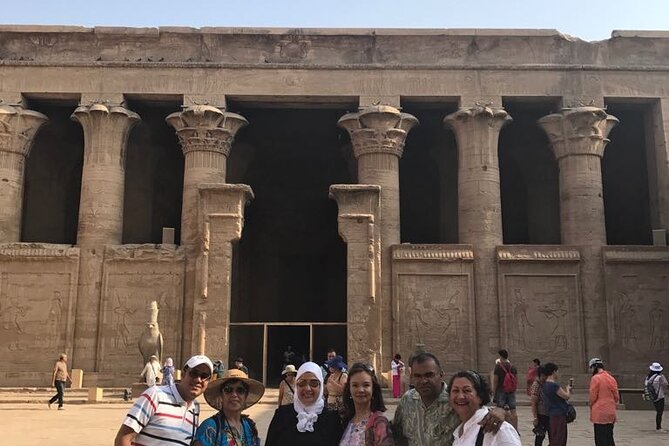
- Edfu is exceptionally complete: The Temple of Horus is one of Egypt’s best-preserved ancient temples.
- Local guides meet you on site: Esam has been specifically noted at Kom Ombo, while the Edfu guide may vary.
- Expect a long road day: The total time is about 8 to 10 hours, with roughly one hour to Kom Ombo, 90 minutes to Edfu, and about two hours onward to Luxor.
- Budget for extras: Temple admission tickets and driver tips are not included in the $75 price.
Why this Aswan to Luxor transfer makes sense
Egypt gives you several ways to move between Aswan and Luxor, but each has a trade-off. A cruise takes longer. A direct car transfer is quicker but skips two of Upper Egypt’s best monuments. This tour takes the middle path: you reach Luxor in one day and use the journey to see Kom Ombo and Edfu.
That matters because both temples are far easier to reach by road than by ordinary public transport. You do not need to arrange separate taxis, work out return rides, or find a guide once you arrive. The driver handles the route, and a local guide meets you at each temple.
The usual day lasts 8 to 10 hours. One published schedule begins around 8:00 a.m. and reaches a Luxor hotel at about 5:00 p.m. Your exact pickup time may differ, but you should keep the entire day open. This is not a quick sightseeing stop between trains.
The vehicle is air-conditioned, and the group size can reach 15 people. In practice, the transport may be a comfortable private car rather than the minibus some people expect. That depends on the day’s bookings and group arrangements, so ask before booking if the vehicle type matters to you.
More Abu Simbel and Philae Tours in Aswan:
- From Aswan: Abu Simbel Temple Day Trip with Hotel Pickup
★ 4.4 · 2,807 reviews - Private Day Tour to Abu Simbel Temples from Aswan
★ 4.5 · 507 reviews - Full Day tour to Abu simbel temples from aswan
★ 4.5 · 309 reviews
Kom Ombo and the temple of two gods
After pickup, the drive to Kom Ombo takes about an hour. The road gives you a look at the settled Nile Valley, with small towns, villages, and rural life passing outside the window. This is one of the more useful parts of the trip, since you see something beyond the famous monuments.
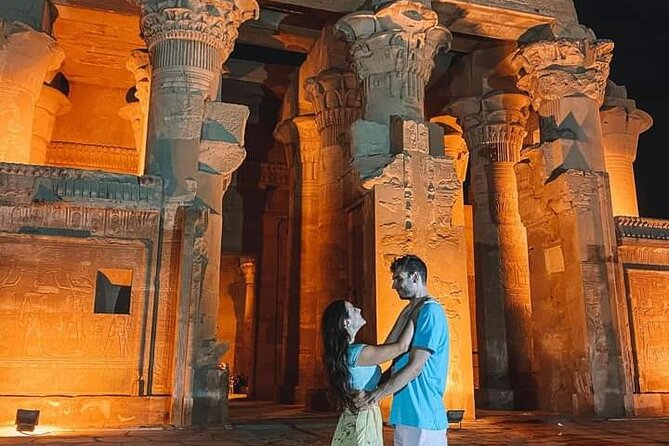
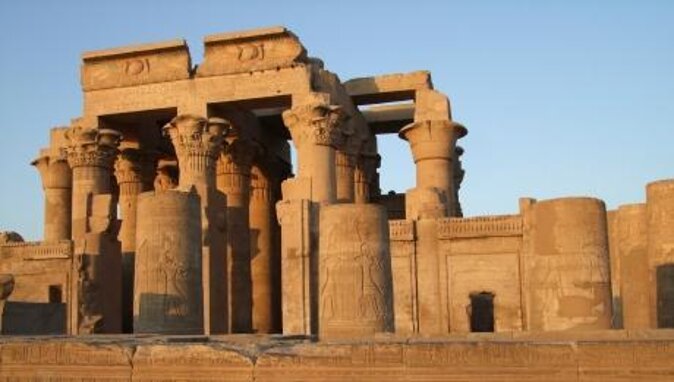
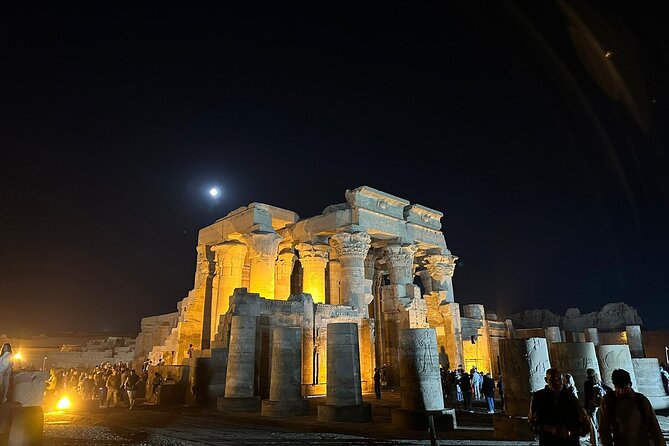
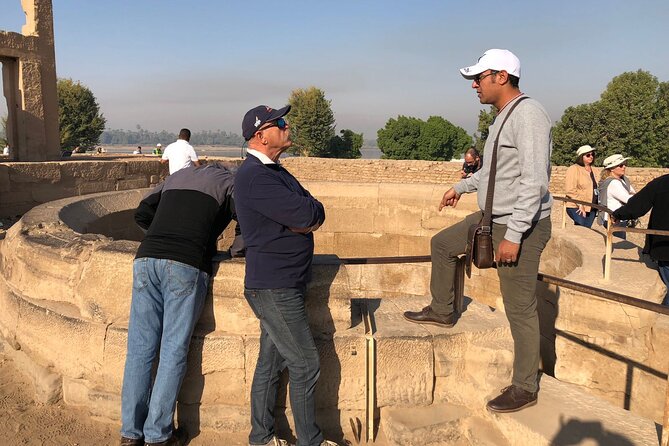
Kom Ombo is unusual from the moment you understand its plan. It is a double temple dedicated to two gods: Sobek, the crocodile god, and Horus, the falcon-headed god. The sanctuary is divided into paired sections, with related rooms and carved scenes arranged for each deity.
The temple sits directly beside the Nile, giving you an open river view. The setting helps explain why this spot mattered. It was not simply a religious building in isolation. Its position connected worship, river travel, and the daily movement of people along the Nile.
Your guide should point out several details that make Kom Ombo different from the temples you may see elsewhere in Egypt. The relief showing surgical instruments is especially interesting. It offers a glimpse into ancient medical practice, though you should listen carefully to the explanation rather than treating every carved object as a precise record of modern medicine.
You may also see the festival list and the Nile meter. These are the sort of details that can be missed if you walk through alone. The festival scenes help show the role of ceremony, while the Nile meter connects the monument to the river’s seasonal rise and fall.
The guided portion is followed by free time. Use it for photographs, a slower look at the carvings, or a few quiet minutes facing the river. The open setting and direct Nile view make Kom Ombo feel different from the enclosed temple spaces farther south.
The mummified crocodile museum
The crocodile museum is a short but worthwhile addition to the Kom Ombo stop. Inside, you can see mummified crocodiles connected with the worship of Sobek. This gives the animal side of the temple’s identity a physical form that the wall reliefs alone cannot provide.
Do not expect a large museum. It is a focused stop, and the visit does not take the place of the temple tour. Still, it helps explain why crocodiles appear so often at Kom Ombo and why Sobek was treated as a powerful religious figure.
There is also time for a bathroom break and coffee before the next drive. That small pause matters on a full road day. You will have been walking in the sun, and the drive to Edfu takes about an hour and a half.
Edfu’s Temple of Horus deserves serious time
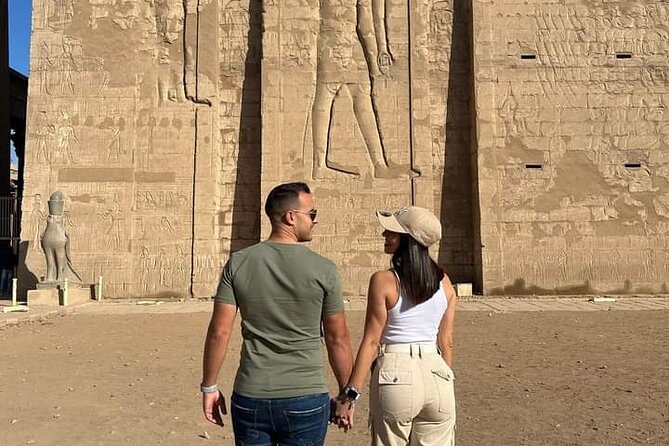
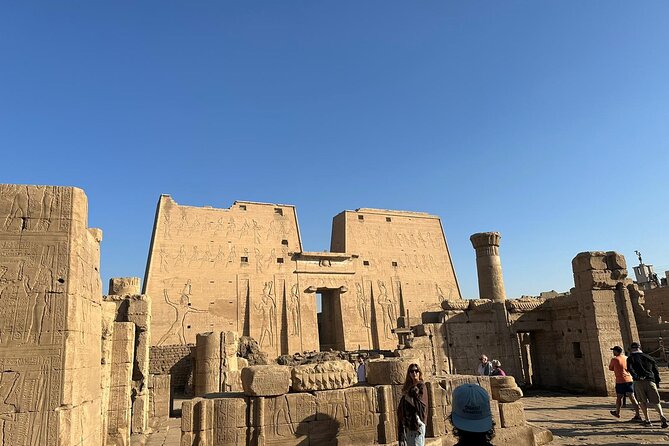
Edfu is the major reward of the second half of the trip. The Temple of Horus is the second-largest temple in Egypt after the Karnak complex, and it is widely valued for its remarkably complete condition.
Construction began in 237 BC and finished in 57 BC, during the Ptolemaic period. That means the temple took nearly 180 years to complete. It served as a main cult center for Horus, the falcon god, and its scale reflects the importance of that role.
The temple was later uncovered in the modern era by a French expedition. Much of what makes it impressive today is how much of the original structure remains. You can read the massive entrance, courtyards, halls, columns, and carved walls as parts of one connected plan rather than as scattered ruins.
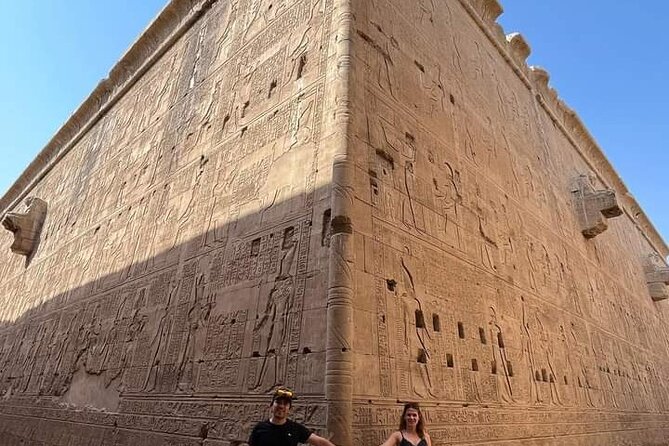
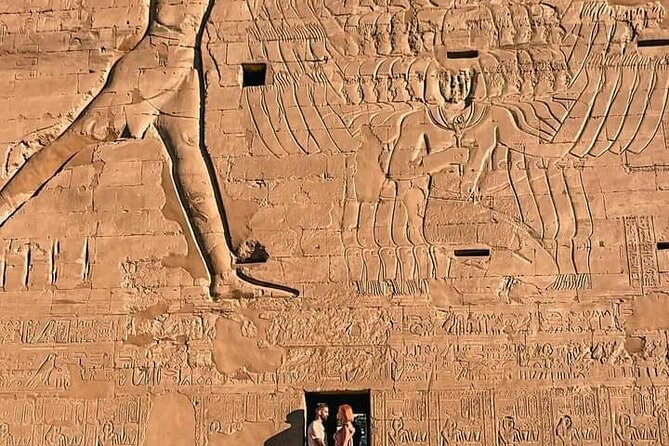
Your guide should explain the scenes on the walls and the religious story behind them. This is where guide quality matters most. A short explanation can give you the basic names and dates, but a stronger guide helps you understand why Horus mattered, how the temple was used, and what the carved ceremonies represent.
One Edfu guide has been singled out by name in past feedback, but the provider does not promise that the same person will lead every departure. For that reason, arrive with realistic expectations. You receive a local guide at each temple, but the depth of the explanation may not be identical from one day to the next.
After the guided tour, you have free time for photos, coffee, and a slower look around. Try not to use every spare minute on your phone. Edfu rewards a pause inside its large spaces, where the scale and preservation become easier to appreciate.
A few more temple visits around Aswan worth a look
- From Aswan: Private Guided Tour of Philae Temple with Entry
★ 4.6 · 239 reviews - Full Day Tour to Abu Simbel Temples from Aswan
★ 4.5 · 218 reviews - Aswan: Philae Temple Guided Half-Day Group Tour
★ 4.5 · 202 reviews - Aswan: Philae Temple Sound & Light Show with Entrance Fees
★ 4.1 · 151 reviews
The road between the monuments is part of the experience
The road journey is not dead time. Between Aswan and Luxor, you pass through smaller settlements and agricultural areas that are easy to miss from a cruise ship or a flight. You get a brief look at ordinary life in southern Egypt, including the towns and villages that support the Nile corridor.
The road conditions have been described as acceptable, though driving style can be fast. One account noted speeds reaching 140 kilometers per hour when conditions allowed. That may appeal if you want to arrive quickly, but it can feel uncomfortable if you prefer a calm ride. Mention your preference to the driver at the start.
Communication can also be uneven. Some drivers speak limited English, while the temple guides handle the site explanations. Confirm your pickup point, destination hotel, and the expected order of stops before leaving Aswan. If you are staying in a Nubian Village or another location outside the central hotel area, provide the exact address in advance.
The usual final leg from Edfu to Luxor takes about two hours. You are then dropped at your Luxor hotel or agreed destination. This direct finish is one of the tour’s practical strengths, since you do not need to find another taxi after a long day.
What the $75 price really covers
At $75 per person, this is not simply a sightseeing tour. You are paying for transport between two cities, stops at two major archaeological sites, local guides, and the convenience of a planned route.
The value is strongest when you are already moving from Aswan to Luxor. A direct ride may cost less, particularly if you arrange one through a local car service, but it would not include the temple visits and on-site guides. A cruise offers a different experience and takes several days, while this option fits the sights into one day.
Admission tickets are not included. You also need to budget for the driver’s tip. Coffee and personal purchases are your responsibility as well. Ask for the current entrance fees before departure so the final cost does not surprise you.
For one person, the price can be attractive because organizing separate transport and guides may cost more in total. For a larger group, compare the per-person price with a private vehicle arranged directly. The main advantage here is convenience, not necessarily the lowest possible transport fare.
The guide question: useful, but not guaranteed to be deep
The experience provides local guides at both temples. This is better than wandering through large monuments with no context, especially at Kom Ombo, where the paired layout and unusual reliefs can be confusing.
Esam has been praised for his work at Kom Ombo and has provided information sheets to help explain the site. That is a useful touch, especially if you want something to refer to after the visit.
Still, you should know the risk. At least one person found that the temple explanations lasted only about 20 minutes at each stop and focused on broad facts already shown on the signs. The provider responded that the full tour ran within the advertised 8 to 10 hours and that the same guides were used for other departures.
The practical lesson is simple: tell the guide what interests you. Ask about the medical relief, the Nile meter, the festival list, the paired sanctuaries, and the meaning of the wall scenes at Edfu. If you want detailed discussion, say so early rather than waiting until the guide is ready to leave.
Who should book this day trip?
I would recommend this experience if you want an efficient transfer and care more about seeing major sites than traveling at a leisurely pace. It suits first-time visitors who have limited time in Upper Egypt and want to combine transport with sightseeing.
It is also a good match if you prefer a road journey to a multi-day cruise. You see the countryside at close range, stop in two towns, and finish in Luxor the same day.
You may want another arrangement if you dislike long car rides, feel uneasy with fast driving, or want extended archaeological explanations at every site. A private guide with a clearly agreed schedule would give you more control, though likely at a higher cost.
Most people can participate, and the activity is near public transportation. The maximum group size is 15, but the actual vehicle may be smaller. Ask about the expected group and car before paying if you need certainty.
Booking details worth knowing
Confirmation is provided when you book, and mobile tickets are accepted. Pickup is offered in Aswan, with drop-off in Luxor. The experience is subject to weather and a minimum number of participants, so a cancellation for either reason may lead to a new date, another experience, or a full refund.
You can cancel for a full refund up to 24 hours before the local start time. Changes or cancellations inside that 24-hour window are not accepted for a refund.
Bring water, sun protection, and comfortable walking shoes. Those items are not listed as inclusions, but you will spend time outdoors at large temple sites. Keep your schedule free after arrival in Luxor, since the road day can run close to the full 10 hours.
Should you book this Aswan to Luxor tour?
Book it if you want two important temples plus an intercity transfer for one reasonable price. Kom Ombo gives you the unusual double sanctuary, crocodile mummies, and Nile views. Edfu gives you one of Egypt’s most complete temples. Together, they make the road from Aswan to Luxor feel worthwhile.
Book with caution if your priority is a slow, highly detailed guided visit. Confirm the pickup point, vehicle type, guide arrangements, admission costs, and expected schedule before departure. For most people with limited time, the convenience is the main draw. Just keep your expectations practical: this is an efficient sightseeing transfer, not a full private Egyptology day.
FAQ
How long does the Aswan to Luxor tour take?
The experience lasts approximately 8 to 10 hours. A typical schedule begins around 8:00 a.m. and reaches a Luxor hotel at about 5:00 p.m.
What temples do you visit?
You visit the Temple of Kom Ombo and the Temple of Horus at Edfu.
Is the crocodile museum included?
The itinerary includes a visit to the mummified crocodile museum at Kom Ombo. Admission tickets for the tour stops are not included in the listed price.
How much does the experience cost?
The listed price is $75 per person.
Are admission tickets included?
No. Admission tickets are not included and must be paid separately.
Is transportation included?
Yes. An air-conditioned vehicle is included, along with pickup in Aswan and drop-off in Luxor.
Are guides included?
Yes. Local tour guides accompany you at the temple visits. Esam has been identified as a Kom Ombo guide on some departures, but specific guides are not guaranteed.
How many people can join the tour?
The maximum group size is 15 people. The actual vehicle may be a car rather than a minibus, depending on the departure.
Is a driver tip included?
No. Driver tipping is not included.
Can I cancel for a full refund?
Yes. You can cancel at least 24 hours before the experience start time for a full refund. Cancellations or changes made less than 24 hours before the start are not refunded.
Just added around Aswan
- Aswan Philae Temple, Obelisk, and High Dam Private Tour★ 4.5 · 17 reviews
- Philae Temple and Aswan High-Dam Half-day tour★ 5.0 · 49 reviews
- Sound And Light Show At Philae Temple In Aswan★ 3.5 · 10 reviews
- Abu Simbel Temples from Aswan★ 4.5 · 10 reviews
- Temple of Edfu★ 4.0 · 11 reviews
- Private day tour to Philae temple-unfinished obelisk and high dam in Aswan★ 4.0 · 6 reviews
- Tour to Abu Simbel Temples from Aswan★ 4.5 · 7 reviews
- Private Tour to Abu Simbel Temple From Aswan★ 5.0 · 10 reviews
Abu Simbel & Philae Temple Tours, compared.
Abu Simbel Temple Private Guided Day Trip with Lunch
Read our review →
Private Day Tour to Abu Simbel Temples from Aswan
Read our review →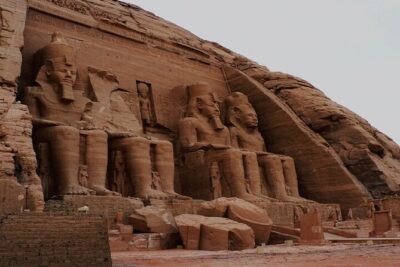
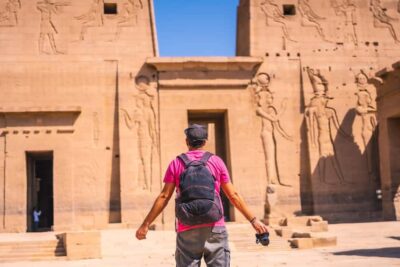
Private Guided Tour of Philae Temple with Entry
Read our review →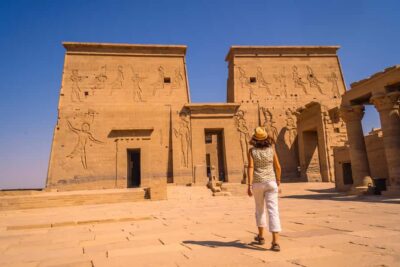
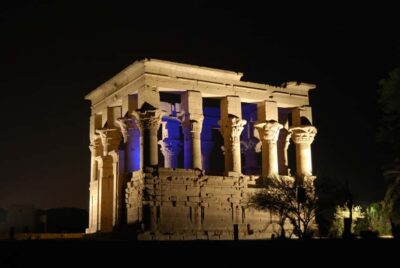
Philae Temple Sound & Light Show with Entrance Fees
Read our review →Browse the lists this tour appears in