
REVIEW · HISTORICAL TOURS
Arequipa, Historic and Colonial City and Santa Catalina Monastery
Santa Catalina Monastery is the heart of this tour. Its painted courtyards, narrow lanes, and quiet gardens feel less like a single religious building than a small city hidden inside Arequipa. The tour also takes you beyond the central plaza to Carmen Alto and Yanahuara, where Misti volcano and the surrounding farmland come into view.
I like the mix of short vehicle rides and guided walks, which lets you see more than you could comfortably cover on foot in three and a half hours. I also like that admission to Santa Catalina is included, along with access to the Iglesia de la Compañía and its remarkable San Ignacio Chapel. The main caution is timing: an afternoon start can leave too little time for the Cathedral tower, and the religious focus may feel heavy if churches and convents are not your interest.
Key points to know before booking
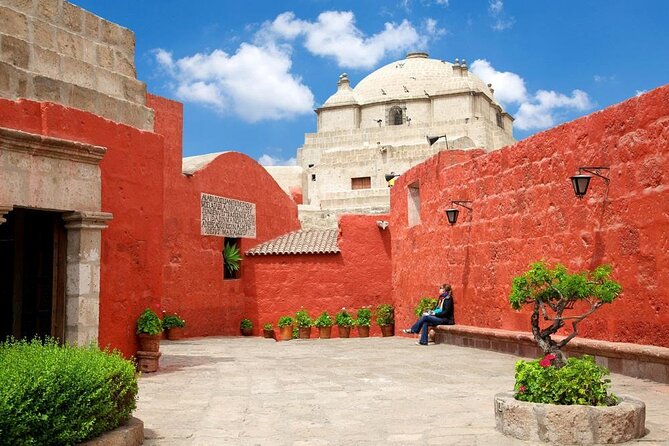
- Santa Catalina Monastery is the main attraction: Allow real attention for its plazas, painted walls, alleyways, and gardens.
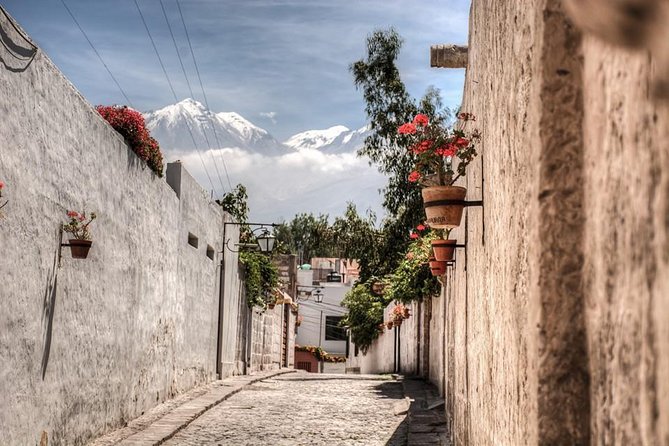
- Carmen Alto and Yanahuara add volcano views: You get two viewpoints outside the main center, with sights of Misti, Chachani, and Pichu-Pichu when the weather cooperates.
- The vehicle saves useful time: Air-conditioned transport connects the outer neighborhoods with the historic center.
- Guides are a major part of the value: Charo, Jeymi, Sline, Kaitlin, and Victor are among the guides praised for clear explanations and strong English.
- The tour is religious in content: Santa Catalina, the Cathedral, and Iglesia de la Compañía take up a large share of the afternoon.
- The group is capped at 15 people: That is small enough for questions, though multilingual groups can affect the pace.
Why Santa Catalina gives this tour its purpose
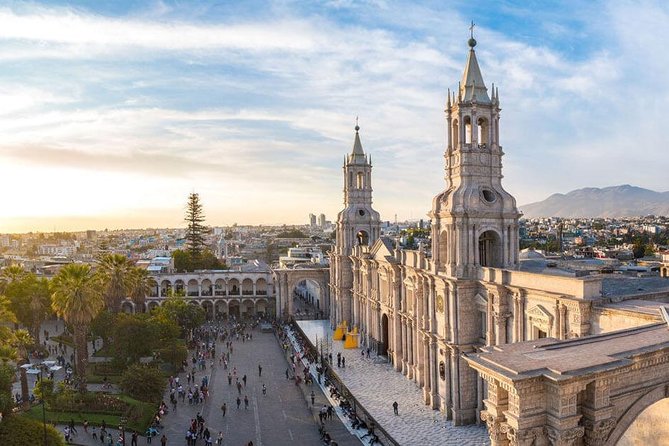
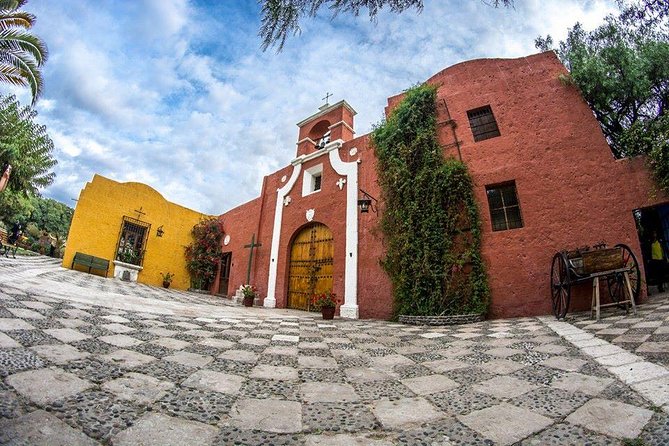
Arequipa is often called the White City because many of its old buildings use sillar, a pale volcanic stone. Santa Catalina Monastery brings that material, and the city’s colonial past, into sharper focus than a quick walk around the Plaza de Armas can manage.
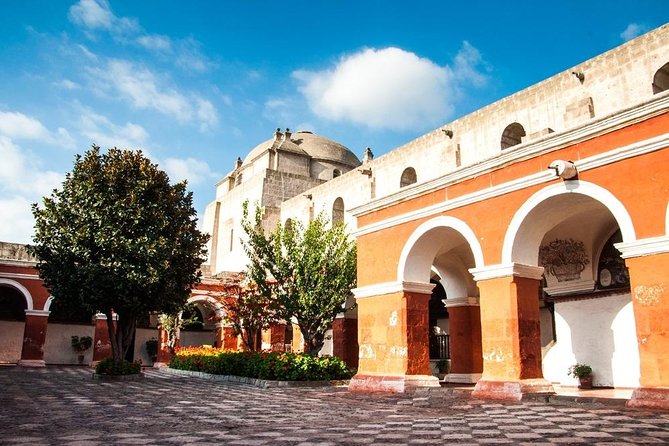
The monastery was closed to the public for nearly four centuries. Inside, you walk through an enclosed world of plazas, narrow streets, cloisters, and gardens. The layout recalls an old Andalusian town, with small lanes leading from one colored courtyard to another. It is easy to lose your sense of being in the middle of a modern city.
I would give the monastery the largest share of your attention. The guide can explain how the religious community lived and why this place became such a significant part of Arequipa’s identity. One guide may lead the city portion while another handles the monastery visit, sometimes in a different language. That arrangement can work well, especially if you need English, French, German, or Portuguese interpretation, but ask questions if the handoff is not clear.
The monastery tour can feel repetitive after a while, particularly if you have already visited several colonial convents in Peru. Still, this is the part that makes the excursion different from a basic city drive. If you are choosing this tour mainly for the volcano views, you may find the monastery takes up more time than expected. If you want an introduction to Arequipa’s religious architecture and colonial life, it is the strongest reason to book.
More History Tours in the world:
- Chiang Mai: Historic Temples and City Guided Walking Tour
★ 4.7 · 650 reviews - Mt. Fuji Heritage Tour: Traditional Villages, Lakes & Shrine
★ 4.5 · 509 reviews - Malta: Prehistoric Temples, Limestone Heritage & Blue Grotto
★ 4.2 · 412 reviews
Carmen Alto: farmland below the volcanoes
The outing begins at about 2 p.m. with hotel pickup and a ride toward Carmen Alto. This first stop gets you away from the dense center and gives you a broader view of Arequipa.
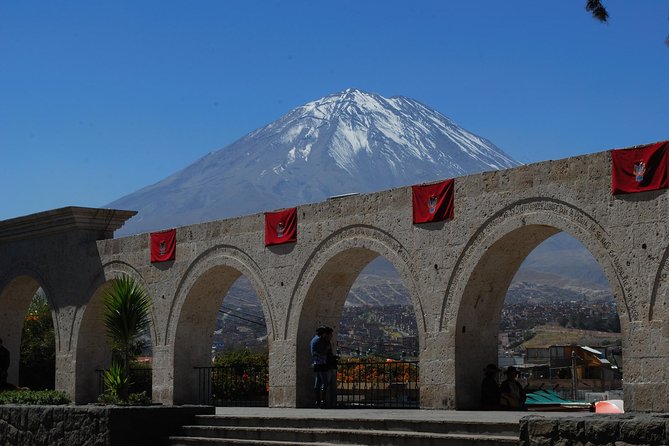
From the viewpoint, farmland and agricultural terraces spread below the city. Three volcanoes frame the view: Misti, Chachani, and Pichu-Pichu. Misti is the familiar cone most associated with Arequipa, while Chachani and Pichu-Pichu complete the dramatic mountain setting.
The view depends heavily on weather. February falls in the rainy season, so clouds can block the volcanoes. If your dates are flexible, a clear afternoon will make this stop much more rewarding. Even on a cloudy day, you can still see the farming area and get useful context about how Arequipa sits between dry urban ground and cultivated land.
This is a good place to ask the guide about the city’s setting. The stop is not simply a photo break. It shows why Arequipa developed where it did and gives you a sense of the relationship between the city, the river valleys, and the volcanoes.
Yanahuara and its famous sillar arches
From Carmen Alto, the vehicle continues to Yanahuara, a colonial district known for its white sillar buildings and Andalusian-style church. The district feels quieter and more residential than the Plaza de Armas, which makes it a useful counterpoint to the central monuments.
At El Mirador de Yanahuara, stone arches frame views across the city toward the volcanoes. The arches are one of Arequipa’s most recognizable photo settings, and the viewpoint gives you another angle on Misti. You also get a closer look at the pale volcanic stone that gives the city its nickname.
I like this stop because it adds local texture. A central plaza can show you the official face of a city, but Yanahuara helps you see how the same architectural style continues into a neighborhood. The vehicle matters here. Reaching both Carmen Alto and Yanahuara by taxi would take planning, and walking between all the afternoon stops would leave less time for the monastery and churches.
The drawback is that viewpoint stops can be brief. If you want long photo sessions, you may need to be ready when the guide calls the group together. The tour is designed to connect several sites, not to linger at one overlook for an hour.
Entering Santa Catalina Monastery
The tour then moves into the historic center and Santa Catalina Monastery. Admission is included, which is important because the entry fee is one of the larger costs built into this outing.
Inside, expect a fair amount of walking on foot. The route passes through open plazas, tight alleyways, cloisters, and planted courtyards. The sudden shift from city traffic to quiet painted walls is part of the appeal. Even a short visit gives you a better sense of the monastery’s scale than photographs do.
Your guide’s role matters most here. A good explanation can turn a row of rooms and courtyards into a story about daily life, faith, social rank, and the way the compound developed over time. Guides called Charo, Sline, Kaitlin, and Jeymi have been praised for clear English, patience, humor, and enthusiasm for Arequipa.
Language arrangements can vary. Some tours have a city guide who speaks several languages, while a separate monastery guide may provide the detailed visit. Multilingual groups can slow the pace, especially when every explanation is repeated. One useful suggestion is to ask the guide to divide long explanations into shorter sections so you can keep moving and still follow the story.
Wear sensible walking shoes. The tour is not presented as difficult, and most people can take part, but the monastery route includes streets, courtyards, and uneven historic surfaces. Religious dress rules also apply: shorts are not allowed inside religious sites, so wear long trousers or a long skirt.
A few more temple visits around the world worth a look
- Lisbon: Jerónimos Monastery Entrance Ticket
★ 4.1 · 14,164 reviews - Angkor Wat Sunrise or Sunset Tour with Guide from Siem Reap
★ 5.0 · 12,109 reviews - Teotihuacan, Guadalupe Shrine & Tlatelolco Day Tour with Lunch
★ 5.0 · 11,603 reviews - From Bangkok: Ayutthaya Temples Guided Tour with Lunch
★ 4.7 · 10,535 reviews
The Plaza de Armas and Arequipa Cathedral
After Santa Catalina, the route reaches the Plaza de Armas, Arequipa’s main square. This is the city’s grandest urban space, surrounded by arcades and framed by the Cathedral.
The Basilica Cathedral dates from the 16th century, though its appearance reflects later changes and rebuilding. Your guide explains the building’s place in the city before you continue to the church complex. The plaza itself is worth seeing slowly, but the tour keeps moving because several major sites are packed into one afternoon.
One timing issue deserves attention. The tour begins at 2 p.m., and the Cathedral may be the final major stop around 5 p.m. The tower viewpoint can close at 4 p.m., so you may not have time to climb it during this tour. If the tower is important to you, ask at the start if the order can be adjusted, or plan to return independently.
That small scheduling problem does not erase the value of the Cathedral visit, but it shows why this excursion is best for orientation rather than total coverage. You see the main parts of the historic center, yet you may want another morning or evening to explore at your own pace.
Iglesia de la Compañía and the San Ignacio Chapel
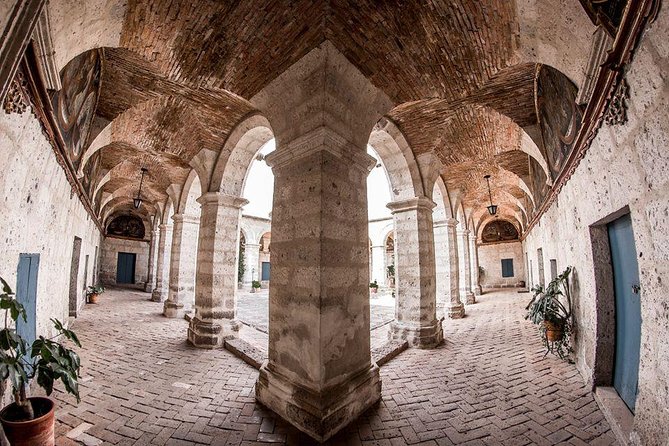
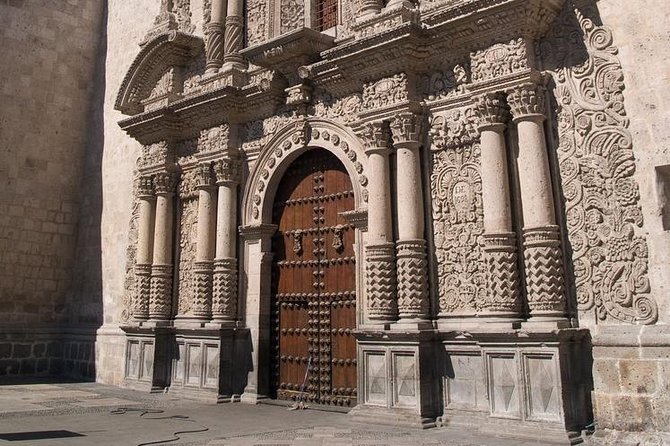
The final church stop is Iglesia de la Compañía, founded by the Jesuits in the 17th century. Its cloisters add another view of Arequipa’s colonial building style, while the San Ignacio Chapel is the visual surprise.
The chapel is known for its elaborate jungle-themed decoration, including painted birds and plants. After the pale stone and restrained lines of the city outside, the interior feels much more crowded with color and detail. It is the kind of place where a guide’s explanation helps you notice what you might otherwise pass by.
Admission to the church was included for some participants along with Santa Catalina, so check the exact inclusions shown when you book. The religious content is substantial: the monastery, Cathedral, and Jesuit church account for much of the walking portion. That suits you if architecture, Catholic art, and colonial history interest you. If you are not drawn to religious sites, this may feel like too much of the same subject.
What the $61 price gets you
At $61 per person, this is not the cheapest way to see Arequipa’s center. You can walk around the Plaza de Armas and view several buildings without paying for a tour. You can also arrange separate taxis to Yanahuara and Carmen Alto.
The value comes from combining the outer viewpoints, transport, guide service, and paid monastery entry in one afternoon. You do not need to work out the order of stops, negotiate several taxi rides, or read your way through Santa Catalina while watching the clock. For a first visit, that convenience has real value.
The small maximum group of 15 also helps. It is not a private tour, and a full group can still feel busy inside narrow monastery passages, but it gives you a better chance to hear the guide than a large coach excursion.
I would book it early if your schedule is fixed. The experience is booked an average of 55 days ahead, which suggests that afternoon places can fill well before the travel date. Free cancellation is available until 24 hours before the start time. Changes or cancellations inside that window are not refundable.
Who will get the most from this afternoon
This excursion suits you if you want a fast, guided introduction to Arequipa and have limited time in the city. It is particularly useful on a first afternoon, when you want to see the main center but also reach two viewpoints beyond it.
You will likely enjoy it if you value:
- Local explanations rather than simply taking photos
- Colonial architecture and church interiors
- Santa Catalina Monastery as a major part of your Peru trip
- Comfortable transport between scattered sites
- A guide who can answer questions in clear English or another supported language
I would choose a different plan if you want long, unhurried time in one place. The route covers a lot, and the monastery section may feel long if convents are not your interest. I would also avoid making this your only chance to see Arequipa from the Cathedral tower, since the late timing may miss its opening hours.
The guide can make or break the experience. Several guides, including Charo, Jeymi, Sline, Kaitlin, and Victor, have been praised for clear explanations and warm service. Still, guide quality and language balance can vary by departure. If your group includes several languages, expect repeated explanations and a slower pace.
Should you book this Arequipa tour?
I would book it if you want the efficient version of Arequipa: two volcano viewpoints, the White City’s sillar architecture, Santa Catalina Monastery, the main square, the Cathedral, and Iglesia de la Compañía in one afternoon.
The strongest reason to go is Santa Catalina, with the transport and guide adding practical value around it. The main tradeoff is the schedule. You will see many important places, but you will not have unlimited time at any one of them, and the afternoon start can be awkward for the Cathedral tower.
For first-time visitors with only a day or two, this is a sensible choice. For repeat visitors, independent walkers, or anyone less interested in religious buildings, spend the $61 on separate site admissions and take your time around the city instead.
FAQ
How long does the tour last?
The tour lasts approximately 3 hours and 30 minutes.
What time does the tour begin?
The stated start time is 2 p.m.
Is hotel pickup included?
Yes. Hotel pickup and drop-off in Arequipa are included.
Is transportation provided during the tour?
Yes. You travel between locations in an air-conditioned vehicle.
What sites are included?
The route includes Carmen Alto, Yanahuara and its viewpoint, Santa Catalina Monastery, the Plaza de Armas, Arequipa Cathedral, and Iglesia de la Compañía.
Is admission to Santa Catalina Monastery included?
Yes. Admission to the monastery is included.
Are food and drinks included?
No. Food and drinks are not included.
Can I wear shorts at the religious sites?
No. Shorts are not allowed inside the religious places on this tour. Wear long trousers or a long skirt.
How many people can join the tour?
The maximum group size is 15 people.
Can I cancel for a full refund?
Yes, if you cancel at least 24 hours before the local start time. Cancellations made less than 24 hours before the tour are not refundable.
Just added around the world
- Chiang Mai Temples & City★ 5.0 · 10 reviews
- Full Day Chiang Rai 3 Temples White, Blue,Big Bhudha Temples★ 4.5 · 11 reviews
- Chiang Mai Old City & Temples 3 hour Twilight Walking Tour★ 5.0 · 9 reviews
- Chiang Mai Temples & Old City Hidden Gems Small Group Tour 2 Hrs★ 5.0 · 6 reviews
- Chiang Mai City and Temples Half-Day Tour★ 4.5 · 136 reviews
- Chiang Mai Old City & Temples Guided Walking Tour – 3 Hrs★ 4.5 · 34 reviews
- The Best Chiang Mai City Private Tour: Famous Temples & Viewpoint★ 4.5 · 7 reviews
- Half Day Chiang Mai City Temples & Museum Tour – Group or Private★ 5.0 · 11 reviews
Historical Tours, compared.
Tanah Lot UNESCO World Heritage Sites Full-Day Tour
Read our review →
Mt. Fuji Heritage Tour: Traditional Villages, Lakes & Shrine
Read our review →
Malta: Prehistoric Temples, Limestone Heritage & Blue Grotto
Read our review →
Day Trip From Addis Ababa See Historical Monastery,Stunning Nature,Animals,Birds
Read our review →
Beijing Historical Tour II including Summer Palace, Lama Temple & Panda Garden
Read our review →Browse the lists this tour appears in