
REVIEW · ABU SIMBEL & PHILAE TEMPLE TOURS
Tour to Abu Simbel Temple with a small group and a Professional tour guide
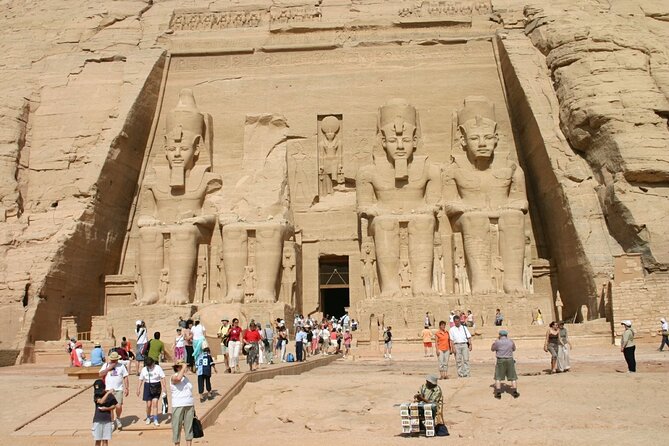
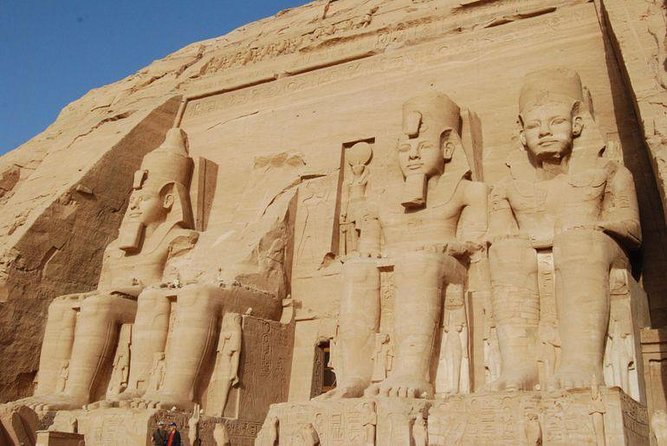
Abu Simbel is one of Egypt’s great encounters: four giant statues of Ramses II greet you before you enter temples cut into the rock more than 3,000 years ago. This early start from Aswan gets you there before the largest crowds, and the solar alignment inside the temple adds a clever piece of ancient engineering to the visit.
I like the hotel-to-hotel transfer, since Abu Simbel sits far from Aswan and the road trip is not simple to arrange alone. I also like the chance to have a guide such as Ahmed explain the four gods, Ramses II, Nefertari, and the temple’s rescue and relocation story. The main catch is time: one account reports only about one hour and 45 minutes at the temples, so this may feel rushed if Abu Simbel is a major reason for your Egypt trip.
Key points to know before booking
- The 4:00 am departure matters: You leave early to make the long road journey and reach Abu Simbel ahead of the biggest crowds.
- Two temples share one site: You see the grand temple of Ramses II and the smaller but finely decorated temple of Nefertari.
- The listed price excludes admission: At $40 per person, the tour covers transport and a professional guide, but not entrance tickets or tips.
- Hotel pickup is included from Aswan: This removes much of the stress from arranging transport to a remote archaeological site.
- Guide quality can shape the day: Mirna has handled trip arrangements for some bookings, while Ahmed is one guide named in the supplied information.
- The small-group promise needs checking: Several accounts praise the organized service, but one complaint says the group was not small.
Why Abu Simbel is worth the early alarm
Abu Simbel is not a quick side trip. The tour lasts about eight hours, and the day begins at 4:00 am. That sounds harsh until you consider the location. The temples are close to Egypt’s southern border with Sudan, well away from Aswan, so most of your time is tied to the road.
I think the early departure has two useful benefits. First, it gives you a chance to arrive before the heaviest crowds. One particularly positive account said the group was picked up on time and reached the site early enough to avoid the biggest rush. Second, an early start leaves some room for the return journey while keeping the trip within a single day.
You should still set your expectations correctly. This is a transport-heavy excursion, not a leisurely day spent wandering through the ruins. One account describes roughly eight hours of driving and only one hour and 45 minutes at Abu Simbel. That is enough to see the main features, but it leaves little time for lingering, careful photography, or a slow look at every carved scene.
More Abu Simbel and Philae Tours in Egypt:
- From Aswan: Abu Simbel Temple Day Trip with Hotel Pickup
★ 4.4 · 2,807 reviews - Luxor: Abu Simbel Temple Private Guided Day Trip with Lunch
★ 4.6 · 546 reviews - Private Day Tour to Abu Simbel Temples from Aswan
★ 4.5 · 507 reviews
The 4:00 am pickup from your Aswan hotel
The day starts with pickup from your hotel in Aswan. The tour includes round-trip transfers, using a clean, air-conditioned car according to the tour details. That is a real advantage in southern Egypt, where comfort matters on a long road trip and the heat can become tiring later in the day.
The early hour also means you should prepare the night before. Have your clothes, passport if needed for your own arrangements, phone, water, and any breakfast items ready. The provided information does not promise breakfast, so do not assume food will be supplied.
The tour is offered as a small-group experience, with the stated benefit of more attention from the guide. That can make a difference at a complicated site such as Abu Simbel. A good guide can explain what you are looking at instead of leaving you with four enormous statues and a lot of unanswered questions.
Still, group size is worth confirming before you pay. One very negative account specifically complained that the group was not small. Other accounts describe smooth organization and attentive service, so the experience may depend on the departure arrangement and the day’s bookings.
The road to Abu Simbel
The road journey is part of the practical cost of seeing Abu Simbel. You are not simply crossing town for a quick monument visit. You are committing most of a day, starting before sunrise, for a focused visit to one remote temple complex.
The supplied information describes a modern, clean, air-conditioned vehicle. That is encouraging, but the tour details do not specify the exact vehicle size, the number of passengers, or planned rest stops. If you have back problems, need frequent breaks, or dislike long drives, ask for those details before booking.
The guide is meant to accompany you through the full trip, not just meet you at the entrance. That gives the journey more value. You can use the drive to get a briefing on the site and ask questions before arriving. The exact guide may vary, but Ahmed is one guide named in the supplied information, and Mirna has been involved in organizing some bookings.
Communication is a point to handle carefully. Some bookings have reportedly been picked up on time, with the organizer checking that everything was going well. Other accounts describe poor communication, late cancellation, and difficulty confirming the departure. Confirm your pickup time and meeting point before the evening before departure, and keep all booking messages available on your phone.
First sight: the four colossal statues of Ramses II
Abu Simbel’s main temple is dedicated to Ramses II, the powerful pharaoh who ruled during Egypt’s 19th Dynasty. The entrance is watched over by four huge seated statues of the king. Their scale is the first lesson here: Ramses wanted the temple to project authority to anyone moving through this southern part of Egypt.
The statues are not merely decoration. The entire setting links the ruler with the gods and presents Ramses as a divine figure. Your guide should point out the carved details, the formal pose, and the way the entrance makes the king appear larger than life.
Inside, the temple continues with halls, pillars, and reliefs connected to Ramses and the gods. The tour information identifies four deities associated with the complex: Ptah, Re-Her-Akhtey, Amun-Re, and Ramses II himself. This is where a professional guide earns the fee. Without explanation, the names and images can blur together. With context, the temple becomes a statement about kingship, religion, and cosmic order.
You may want to spend your limited time in a clear order. Start with the exterior statues, then move through the main interior spaces, and save a few minutes to look back at the entrance. If the guide gives a time limit, listen closely. It is easy to lose half your visit at the front facade.
More Guided Tours in Egypt:
- From Aswan: Private Guided Tour of Philae Temple with Entry
★ 4.6 · 239 reviews - Aswan: Philae Temple Guided Half-Day Group Tour
★ 4.5 · 202 reviews - Private 2 Hour Guided Tour to Philae Temple from Aswan
★ 5.0 · 45 reviews - Aswan: Guided Tour to High Dam, The Obelisk & Philae Temple by Motorboat
★ 4.5 · 38 reviews
The temple of Nefertari
The second temple belongs to Nefertari, the wife of Ramses II. It is smaller than the main temple, but smaller does not mean unimportant. Its facade includes figures of Nefertari and Ramses, showing her unusual prominence within the royal program.
The temple gives you a useful contrast. The Ramses temple is built to overwhelm. Nefertari’s temple feels more intimate, with its own religious purpose and decoration. The pairing makes clear that Abu Simbel was planned as a royal complex, not a single monument built around one person.
The tour description refers to Nefertari as a queen, although the name is sometimes mistakenly written as Nefertiti in casual descriptions. Your guide should help separate these two historical figures. Nefertari was the royal wife associated with the smaller Abu Simbel temple, while Nefertiti was a different queen from another period.
With only about 1 hour and 45 minutes reported at the site, you may need to choose between a slow look at the interior carvings and a relaxed visit to both temples. You can see both, but you may not have time to study every wall.
The solar alignment inside the temple
One of Abu Simbel’s most memorable features is the solar alignment. Twice each year, sunlight reaches deep into the temple and illuminates important statues inside. The design shows how carefully the builders connected architecture, religion, and the movement of the sun.
The supplied details do not give the exact dates of the alignment, so do not book this standard day trip assuming you will see the event. Ask the guide or organizer if your travel date has any special connection to it. Even on an ordinary day, the alignment is worth learning about because it helps explain why the temple was positioned and designed as it was.
This is also a good example of why the guide matters. The temple is not only a large facade carved into stone. Its corridors, chambers, gods, and lighting were planned together. A clear explanation can turn a short visit into something you remember long after the return drive.
What the $40 price really covers
At $40 per person, the tour can be good value if you want a simple way to handle the long transfer from Aswan. You are paying for pickup and drop-off, an air-conditioned vehicle, and a professional guide. Those are the parts that are hardest to arrange smoothly on your own.
The price does not include entrance fees to the historical sites. Tips are also excluded. That means the advertised price is not your full cost for the day. You should budget for the admission ticket separately and decide in advance how much you want to tip for the guide and driver.
The value depends heavily on execution. A punctual pickup, comfortable vehicle, clear confirmation, and useful guiding make the price attractive. A late cancellation or unclear communication can erase that value quickly, especially because Abu Simbel usually requires careful planning around hotel stays and onward travel.
There are also reports of very strong organization. One booking made only four hours before departure was reportedly accepted, with pickup on time and the driver making extra stops. That suggests some departures can be flexible, but I would not treat last-minute availability as guaranteed.
The biggest concern: organization and time on site
The most serious weakness is not the temple. It is the possibility of communication trouble. Some accounts describe a smooth day, early arrival, and helpful support from Mirna. Others describe cancellation just hours before departure, unanswered messages, and difficulty obtaining a refund without outside help.
That split means you should take a few simple precautions. Confirm the departure time and pickup location. Ask whether the group will truly be small. Confirm the entrance fee and expected time inside the complex. If the tour is important to your schedule, avoid placing it immediately before a flight, train, or cruise departure.
The cancellation rules allow a full refund if you cancel at least 24 hours before the 4:00 am start time. Cancellations inside 24 hours are not refunded, and changes during that period are not accepted. If poor weather cancels the trip, you should be offered another date or a full refund.
The tour also requires reasonable weather conditions, though the details do not explain how often weather affects departures. Keep the local cut-off time in mind, since it is based on the scheduled start in Egypt.
Who will enjoy this Abu Simbel trip
I would recommend this tour to you if you want the main Abu Simbel experience without arranging a private vehicle, and if you are comfortable with an early start and a long road journey. It suits visitors staying in Aswan who have one free day and want hotel pickup handled for them.
It also works well if you prefer a guide to explain the carvings and religious symbols. The temples reward context, and the four gods, royal imagery, and solar alignment are easier to appreciate when someone connects the details.
I would be more cautious if you want a slow archaeological visit. The reported 1 hour and 45 minutes on site may feel short, especially if you enjoy photography or want to read every carved scene. A private or longer option may suit you better, though this tour’s price is likely to be lower.
I would also avoid relying on it without confirmation if your schedule is tight. The mixed reports about communication are too important to ignore. The tour has earned a 4.4 rating from 27 reviews, with strong praise for punctual pickups and smooth handling, but the serious complaints point to a risk you should manage before departure.
Should you book this Abu Simbel tour?
Book it if low cost, hotel pickup, and a professional guide matter most to you. The route is long, the departure is early, and the price excludes entrance tickets, but the package can remove much of the effort from reaching one of Egypt’s most important ancient sites.
Before paying, confirm the pickup, group size, guide, entrance costs, and time at the temples. If you receive clear confirmation and have enough flexibility in your itinerary, this is a practical way to see Abu Simbel. If your plans cannot survive a last-minute change, or you want several relaxed hours among the temples, choose a more secure and longer arrangement.
FAQ
Where does the tour depart from?
Pickup is offered from your hotel in Aswan, with return drop-off to your hotel included.
What time does the tour start?
The stated start time is 4:00 am.
How long does the experience last?
The tour lasts approximately eight hours.
What temples will I visit?
You will visit the Abu Simbel Temple Complex, including the temple of Ramses II and the temple of Nefertari.
Is a guide included?
Yes. A professional tour guide is included.
Are entrance fees included in the price?
No. Entrance fees for the historical sites are not included.
Is the tour offered in a small group?
The experience is advertised as a small-group tour, but one account raises concerns that the group may not always be small. Confirm the expected group size before booking.
Can I cancel for a full refund?
Yes, if you cancel at least 24 hours before the experience start time. Cancellations made less than 24 hours before departure are not refundable.
Just added around Egypt
- St Simon Monastery ,Cave Church , Garbage City and Coptic Cairo Private day tour★ 5.0 · 29 reviews
- Tour to Giza Pyramids, Sphinx, Valley Temple, Camel Ride & Lunch★ 5.0 · 7 reviews
- Monastery St Simon with Cave Church and Garbage City Private Tour★ 5.0 · 15 reviews
- Private Full-Day Red Sea Monasteries Tour from Cairo★ 5.0 · 17 reviews
- Overnight Tour Moses Mountain St. Catherine Monastery from Cairo★ 5.0 · 21 reviews
- Overnight Trip to Saint Catherine Monastery from Cairo★ 4.0 · 14 reviews
- Private Guided Tour to Giza Pyramids, Valley Temple and Sphinx★ 5.0 · 10 reviews
- Shared Tour To Abu Simbel Temple From Aswan★ 5.0 · 7 reviews
Abu Simbel & Philae Temple Tours, compared.
Abu Simbel Temple Private Guided Day Trip with Lunch
Read our review →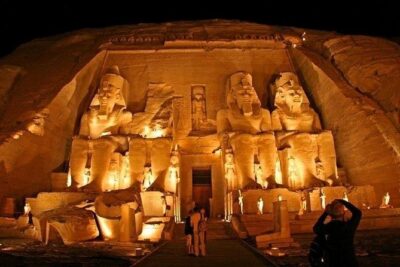
Private Day Tour to Abu Simbel Temples from Aswan
Read our review →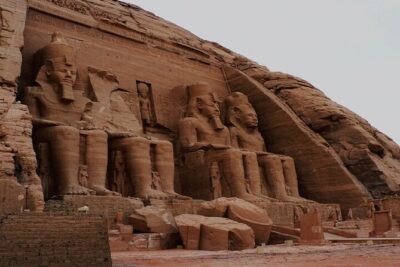
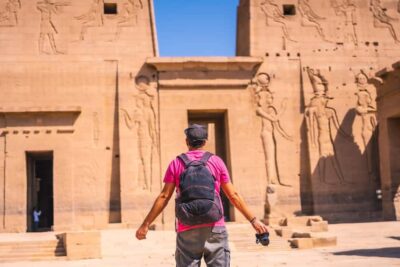
Private Guided Tour of Philae Temple with Entry
Read our review →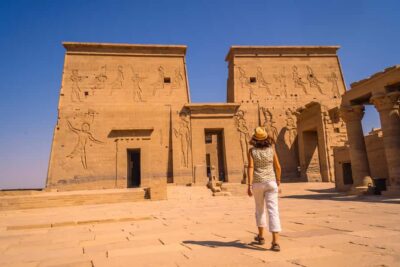
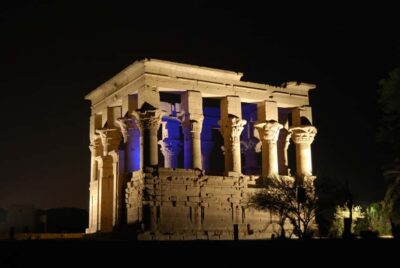
Philae Temple Sound & Light Show with Entrance Fees
Read our review →Browse the lists this tour appears in