
REVIEW · ANGKOR WAT TOURS
Siem Reap – Discover Angkor Wat by Jeep
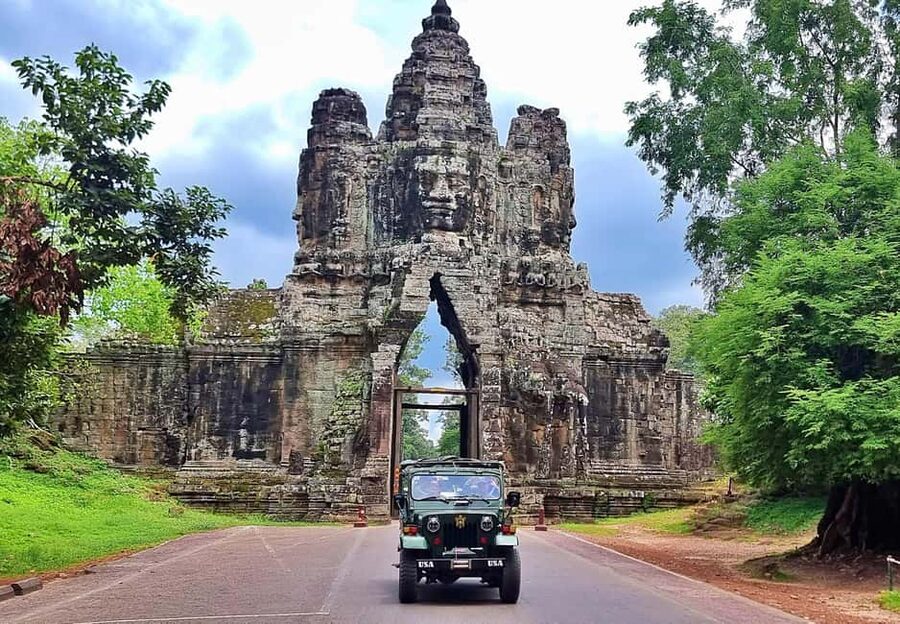
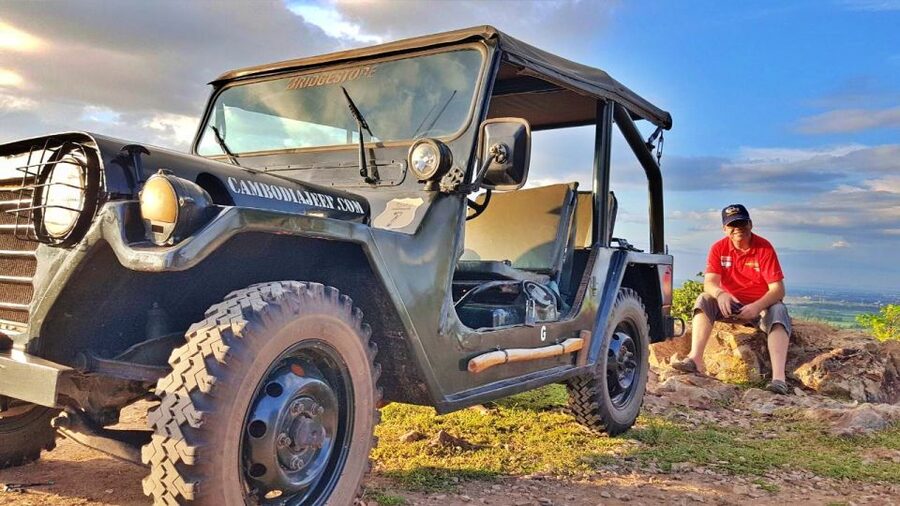
The best part of this Angkor tour is the open vintage Jeep, which takes you beyond the usual temple circuit and onto dusty village roads. You get Angkor Wat, Bayon, and Ta Prohm, but also quieter ruins and a look at daily life outside the main monuments. I especially like the private guide and driver, plus the local lunch in a family home near East Baray lake. The drawback is simple: the Jeep is fun, but it is exposed, dusty, and less comfortable than an air-conditioned car.
This is a long, hot day with a lot packed in. Your guide may tailor the route, as James did for one visitor with a bad leg, and guides such as Yim Sithon, Ke Tola, Thai, Chan, and Makara have been praised for their history, humor, and care. Still, the language level can vary, and one guide was judged less able to answer detailed historical questions.
Key points at a glance
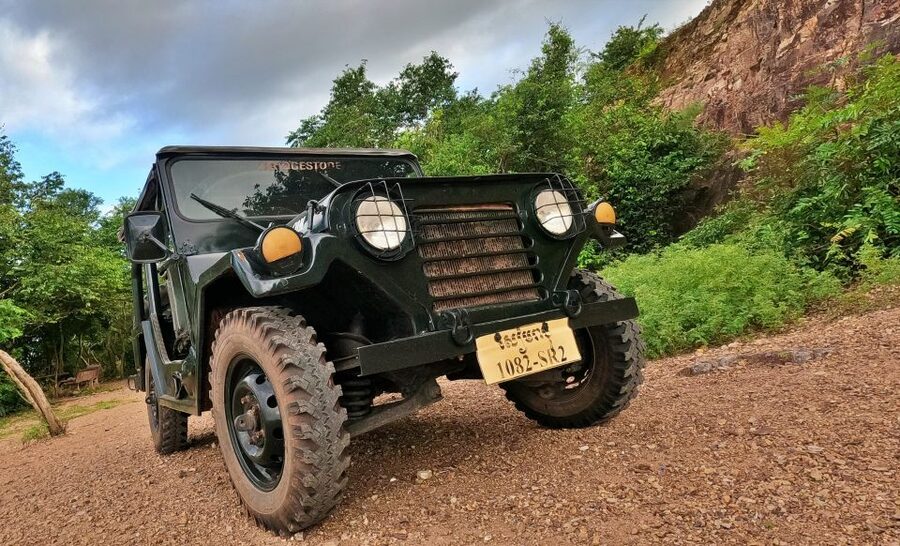
- Vintage Jeep transport: Ride in an open American-style Jeep with the driver and English-speaking guide in front.
- Main Angkor temples: See Angkor Wat, Angkor Thom, Bayon, and Ta Prohm, the temple linked with Tomb Raider.
- Quieter temple stops: The route can include lesser-visited ruins and back roads that large buses cannot use.
- Village life: Light off-road driving gives you views of countryside homes and everyday life around Siem Reap.
- Local lunch: Eat a substantial meal at a traditional local home or nearby restaurant, depending on the day’s route.
- Important extra cost: The Angkor pass is not included. Admission is listed at $37 per person, with a 3-day pass strongly suggested.
Why the vintage Jeep changes the day
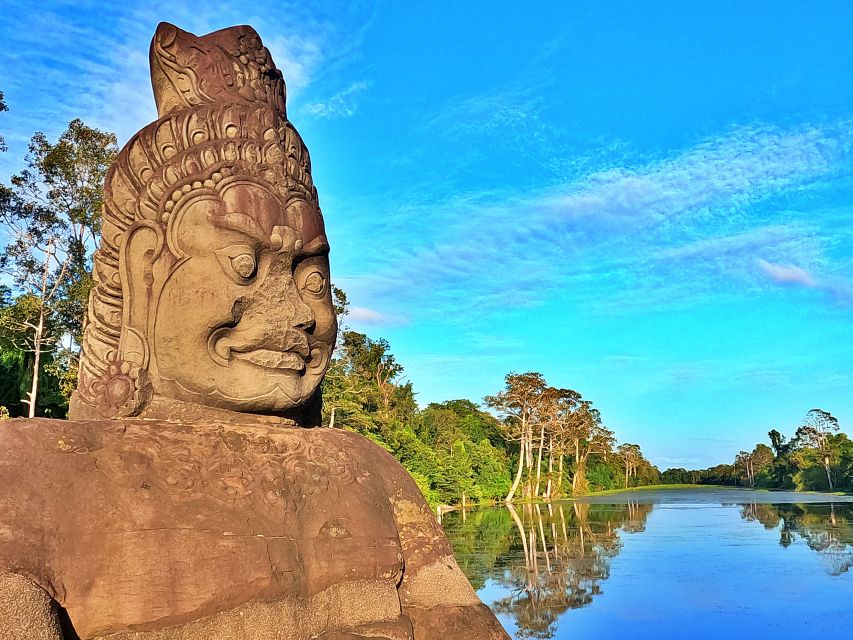
Angkor is not one temple. It is a huge archaeological park with major monuments spread across roads, forest, villages, and water reservoirs. The Jeep gives the day a sense of movement that a standard tuk-tuk circuit does not.
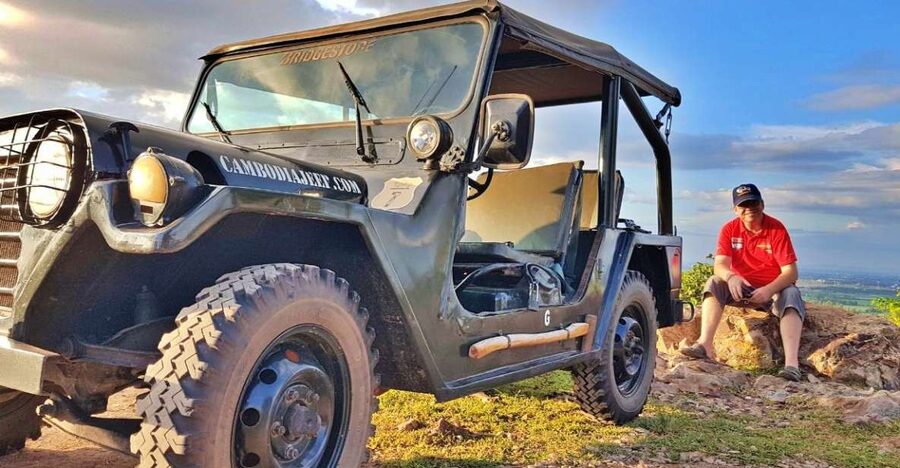
You sit in an open vehicle, close to the road and exposed to the weather. That means dust in the dry season and mud in the rainy season. It also means better contact with the countryside, with no glass or air-conditioning separating you from the road.
The Jeep is best for one or two people who enjoy the ride as part of the experience. The front seats belong to the driver and guide, so the rear can feel cramped if your party is larger. One booking with three customers found the seating tight, while another group of five used two Jeeps.
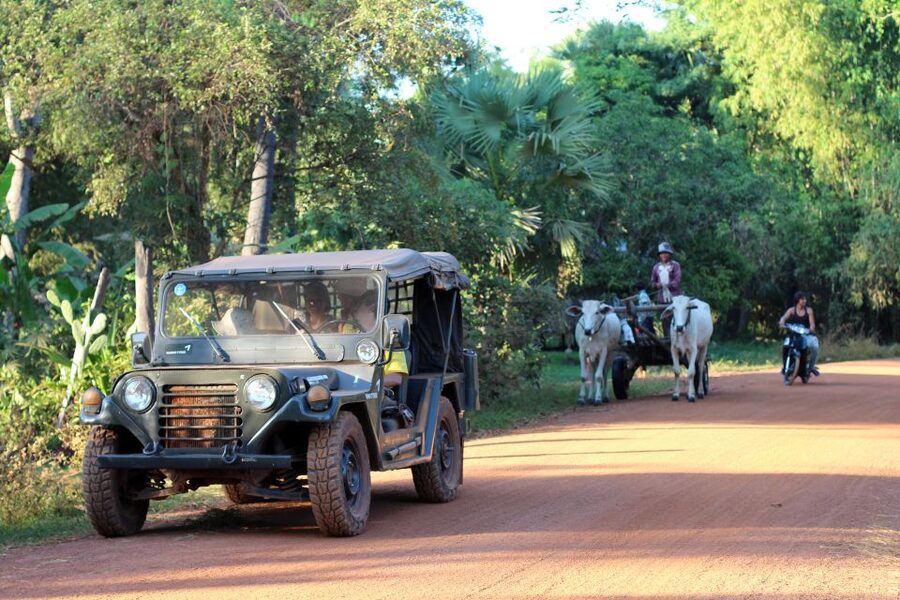
The vehicle is not just a novelty. It can use smaller routes and, in some cases, reach areas that buses and many tuk-tuks do not. Several itineraries included light off-roading through villages and back roads. Do not expect serious four-wheel-drive adventure, but do expect bumps, dust, and a more open view of Siem Reap Province.
More Angkor Wat Tours in Siem Reap:
- Angkor Wat Sunrise or Sunset Tour with Guide from Siem Reap
★ 5.0 · 12,109 reviews - Siem Reap: Angkor Wat: Small-Group Sunrise or Sunset Tour
★ 5.0 · 9,444 reviews - Siem Reap: Angkor Wat 2-Day Tour with Sunrise and Sunset
★ 4.9 · 4,429 reviews
Starting with Angkor Thom and Bayon
The day begins with hotel pickup. Your guide collects you from the lobby, so be ready at the agreed time. From there, the route usually moves toward Angkor Thom, the great walled city that includes Bayon.
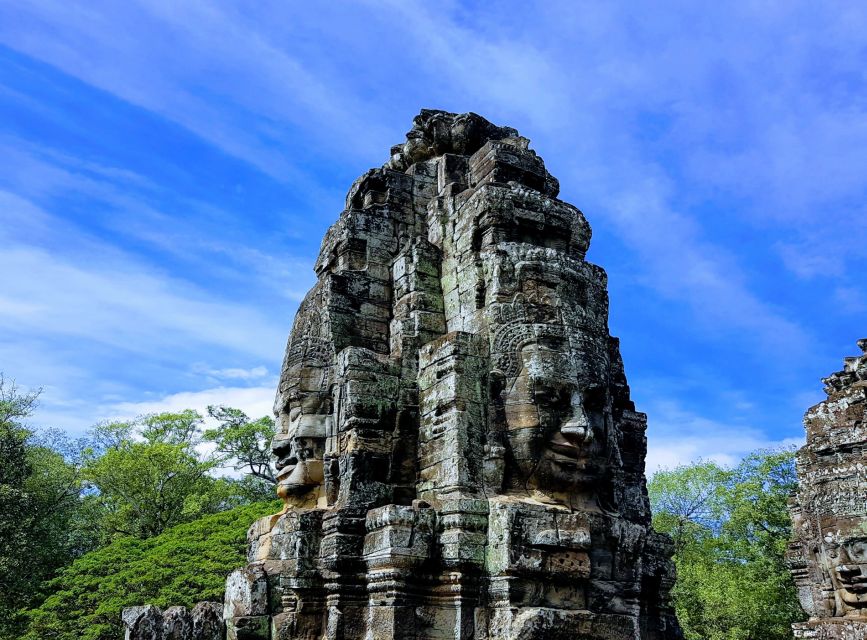
Bayon is famous for its enormous carved faces. The temple is more compact and visually busy than Angkor Wat, with towers, galleries, narrow passages, and stone figures close together. A good guide helps you read the carvings instead of simply pointing at the largest face and moving on.
Guides such as Makara, Thai, and Boritz were praised for making the history lively and for answering questions along the way. Several guides also helped with photographs, finding good angles and taking pictures for solo visitors or couples. That small service matters when you are carrying a camera and trying to frame both people and temples.
The main sites can be crowded. The Jeep does not give you Angkor Thom or Bayon to yourself, and you should not expect a private monument at every stop. The value is in the way the guide manages the day, using quieter corners, alternate approaches, and less visited temples when time and conditions allow.
Ta Prohm and the Tomb Raider effect
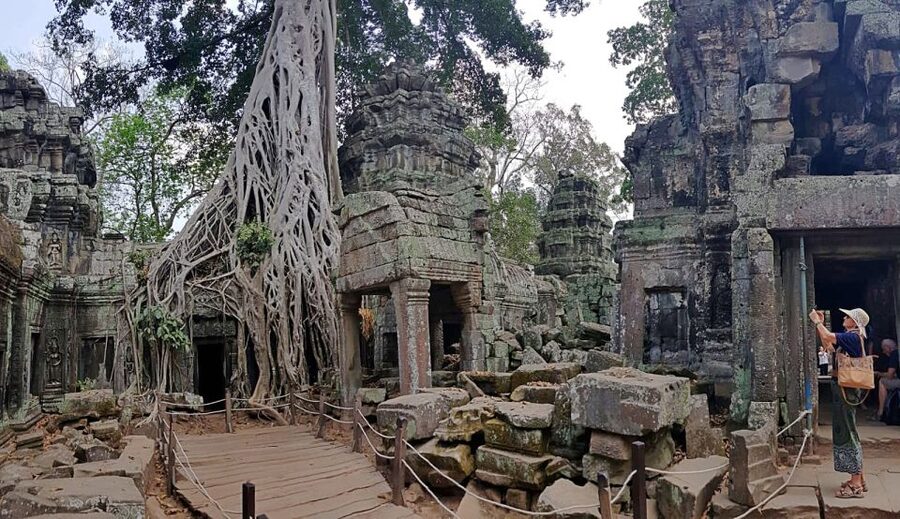
Ta Prohm is the temple many people recognize from Tomb Raider. Its appeal comes from the meeting of architecture and forest. Stone galleries, carved doorways, and giant tree roots create the famous atmosphere, though the site is also one of Angkor’s most popular stops.
This is where the Jeep’s special access can help with the mood of the day, but it cannot remove the crowds from a major attraction. Visit at a sensible time and listen to your guide’s advice about which paths to use. The temple has uneven ground, steps, and areas where you will need to watch your footing.
Ta Prohm is not simply a photo stop. Look closely at the carvings and the way the roots have grown across the masonry. Your guide can explain how the temple fits into the wider Angkor complex and point out details you might miss when walking alone.
The site also shows why comfortable shoes matter. The tour involves a great deal of walking and standing in heat. If your knees, back, or legs are weak, take the physical demands seriously. The tour is not suitable for wheelchair users, pregnant women, people with back problems, or children under three.
Angkor Wat deserves unhurried time
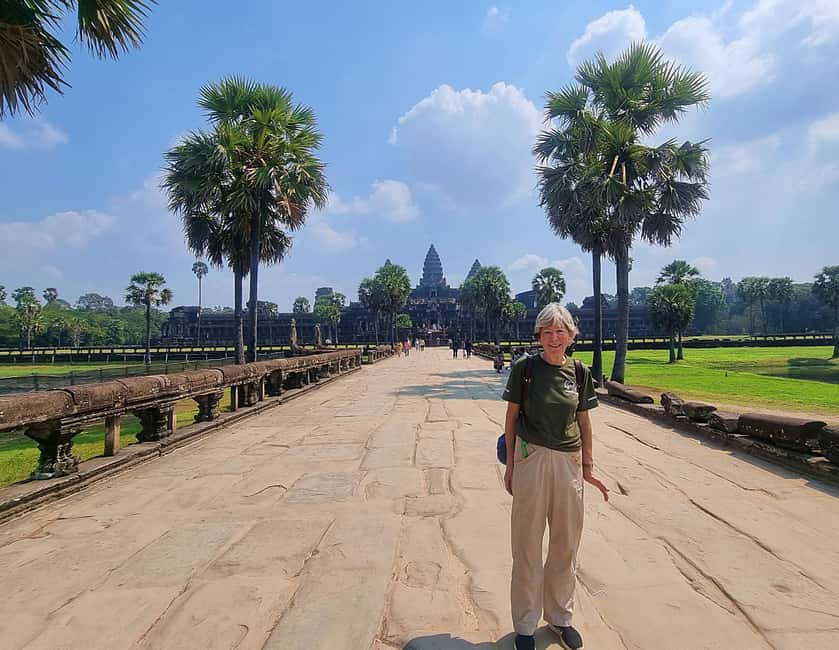
Angkor Wat is the major event, and rightly so. Its scale is hard to grasp from photographs. Long galleries, towers, carved bas-reliefs, and apsara figures reward slow looking, while the surrounding moat gives the complex its monumental setting.
The temple was built in the 12th century, and the carvings show scenes, figures, and religious imagery from the Khmer world. Your guide should help you connect the images to the building rather than treating the temple as a series of attractive stones.
The tour description promises a full visit to Angkor Wat, not a quick roadside view. Even so, the day contains several temples and a lunch stop, so you should tell your guide if Angkor Wat is your top priority. The private format makes this easier than a large group tour. Past itineraries were adjusted for personal requests, and guides allowed visitors to move at their own pace.
Dress rules are strict because Angkor’s temples remain sacred religious sites. Your shoulders must be covered, and clothing must reach at least the knees. Sleeveless shirts, tank tops, short shorts, mini-skirts, and see-through clothing are not suitable. Wear clothes you can walk in and do not mind dirtying.
The Angkor entrance pass is extra. Admission is listed at $37 per person, and the operator strongly suggests the 3-day option. That advice is worth considering if you plan to return to the park on another day, since the Jeep tour itself only lasts eight hours.
A few more temple visits around Siem Reap worth a look
- Siem Reap: Full-Day Angkor Wat Guided Tour with Sunset
★ 4.9 · 3,803 reviews - Angkor Wat Sunrise tour with Small – Group and Guide tours
★ 5.0 · 3,655 reviews - Angkor Wat Highlights and Sunrise Guided Tour from Siem Reap
★ 5.0 · 3,213 reviews - Angkor Wat Sunset Small Group Tour with Lunch Included
★ 5.0 · 3,059 reviews
The quieter ruins are the real bonus
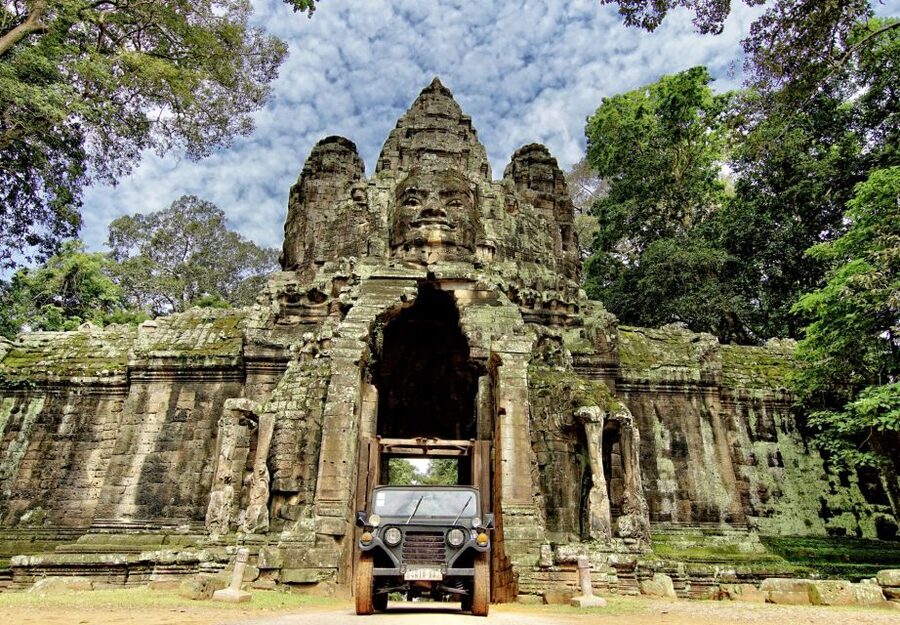
The main temples are essential, but the lesser-visited stops give this tour its character. At a small ruin, you can hear the road, birds, or village activity instead of following a line of buses. The monuments may be smaller and less polished, but they often make the Angkor area feel larger and less packaged.
You should ask your guide which additional temples are planned for your date. The exact route can change, and past guests saw different smaller ruins. One person remembered visiting another small temple but could not recall its name. That is normal for a full day in a large park with changing road and crowd conditions.
The off-road sections also matter. You may pass through villages near Siem Reap, see rural homes, and get a closer look at how people live beyond the ticketed monuments. This is not a separate village tour with a set cultural program. It is a side of the day that appears through the driving route, so keep your expectations realistic.
The roads can be rough. Dust settles on clothes, bags, and cameras in the dry season, while rain can turn the tracks muddy. Bring a sun hat, sunscreen, a camera, and a reusable bottle. Old clothes are the smart choice, especially pale clothing that shows red dust.
Lunch near the lake or in a local home
Lunch is included and is meant to be part of the cultural experience, not just a break at a standard tourist café. The description places the meal with a family in a traditional home near East Baray lake. Past routes also included lunch near Srah Srang, so the precise setting may depend on the day.
The meal has generally been described as filling and enjoyable, though one person found it merely average. That is a useful warning: the strength of this stop is the local setting and the chance to pause, not a guaranteed fine-dining experience.
Lunch also gives you relief from the heat. One account described an air-conditioned lunch stop, but that should not be treated as a fixed feature of every departure. Ask your guide where the meal will be served if cooling off is important to you.
Drinks and personal expenses are not included. Water refills are included, and drivers have been praised for handing out cold water and wet towels after temple walks. Bring your own reusable bottle so the refill service is useful and you produce less plastic waste.
What the guide and driver add
The guide is the most important part of this tour. A Jeep can make a memorable entrance, but it cannot explain the bas-reliefs, religious symbols, temple layouts, or daily life around Angkor.
The strongest guiding accounts describe people who were warm, funny, patient, and able to adjust the pace. James was especially attentive to a visitor whose husband had a poorly leg. Ke Tola was praised for his history and easy manner. Chan was described as an excellent English-speaking guide, while Thai was noted for clear explanations and a friendly style.
Other names connected with strong days include Makara, Bunn, Boritz, Dolar, Pisa, and Soborint. This does not mean every departure will have the same person, and English ability can vary. One person found the guide’s explanations less useful for detailed questions about temple use and ordinary life. If those subjects matter to you, do some reading before you go and ask direct questions during the day.
The driver matters too. Safe driving is particularly important on uneven roads and when the Jeep is full. Several itineraries included regular water service, prompt pickup, and careful driving. That basic care makes a hot, dusty day much easier.
Price, timing, and practical value
The listed price is $225 for a group of up to one person, with an eight-hour duration. The wording is unusual, so confirm the final price for your party before booking. You also pay the Angkor entrance fee, listed at $37 per person, and drinks or personal purchases are extra.
At first glance, this is expensive beside a tuk-tuk. The comparison is not quite fair. You are paying for a private guide, private driver, vintage Jeep, fuel, lunch, water refills, hotel pickup, and a route that can include smaller roads and temples. For a solo visitor who wants a guide and does not want to organize transport, the cost may make sense.
For two or more people, check how the group pricing works. The rear seating can be cramped, and a larger party may need two Jeeps. The tour is less attractive if you only want to see Angkor Wat quickly and do not care about the vehicle, village roads, or personal guiding.
The booking terms are flexible: you can reserve now and pay later, and cancellation is free up to 24 hours before departure. Starting times vary, so check availability. Pickup is included from the hotel lobby you provide, but punctuality matters.
Who should book this Angkor Jeep tour?
I would choose this for a first visit when you have one full day and want more than the standard three-temple loop. It suits people who like a private pace, local roads, photography stops, and a guide who can adjust the plan.
It is also a good fit if you want to see how the Angkor area connects with village life. The countryside driving is not filler. It gives the monuments a human setting and breaks up a day of stone, stairs, and carved walls.
I would think twice if you need comfort, shade, or quiet transport. An air-conditioned vehicle will be easier in the hottest part of the day. The Jeep is open, exposed, and dusty, and the route may feel tiring by the final temple.
A bad knee does not automatically rule it out, since the guide and driver have made thoughtful adjustments for visitors with mobility problems. Still, the formal limits matter: this activity is not suitable for wheelchair users, pregnant women, people with back problems, or children under three.
Should you book it?
Book this tour if the Jeep itself sounds like fun and you want a private day that mixes Angkor’s major monuments with smaller ruins and village roads. The strongest value comes from the guide, the flexible route, the local lunch, and the chance to avoid spending every minute in the main tourist flow.
Choose a standard car or tuk-tuk instead if you want the cheapest practical way to cover the temples, or if heat and dust will spoil the day for you. If you do book, wear modest old clothes, cover your shoulders and knees, bring sunscreen and a hat, and budget separately for the temple pass. Those small preparations let you enjoy the parts that make this experience different.
FAQ
Is the Angkor entrance fee included?
No. The Angkor pass is extra and is listed at $37 per person. A 3-day pass is strongly suggested by the tour provider.
How long does the Jeep tour last?
The activity lasts eight hours, though some past outings were described as taking about seven hours. Check the available starting times when booking.
Is the tour private?
Yes. It is offered as a private group experience with your own vintage Jeep, driver, and English-speaking guide.
What clothing is required at the temples?
Your shoulders and knees must be covered. Sleeveless shirts, tank tops, short skirts, short shorts, and see-through clothing are not allowed.
Is lunch included?
Yes. Lunch is included, with the experience described as a meal at a traditional local home near East Baray lake. Past routes have also included lunch near Srah Srang.
Is the tour suitable for children or people with mobility limits?
It is not suitable for children under three, pregnant women, people with back problems, or wheelchair users. The tour also involves heat, walking, uneven temple ground, and an open vehicle.
Just added around Siem Reap
- Ticket for Angkor Balloon Ride.★ 3.7 · 46 reviews
- Sunrise at Angkor Wat Temple: 3-Hour Private Tour★ 4.7 · 30 reviews
- Small-Group Full Day Angkor wat Guide tour with Sun set★ 5.0 · 136 reviews
- Siem Reap: Private 4-Day Angkor Wat and Phnom Kulen Tour★ 5.0 · 9 reviews
- Angkor Wat: Sunrise 2.5 Days Temples & Tonle Sap-Small Group★ 5.0 · 10 reviews
- Siem Reap : Private Tuk-Tuk Tour of the Magnificent Temples.★ 4.9 · 14 reviews
- Siem Reap: Ultimate Angkor Wat Offbeat Experience by Jeep★ 4.9 · 8 reviews
- Siem Reap: Personalized Angkor Wat Sunrise/Set by TukTuk/Car★ 4.9 · 41 reviews
Angkor Wat Tours, compared.
Angkor Wat Sunrise or Sunset Tour with Guide from Siem Reap
Read our review →
Angkor Wat: Small-Group Sunrise or Sunset Tour
Read our review →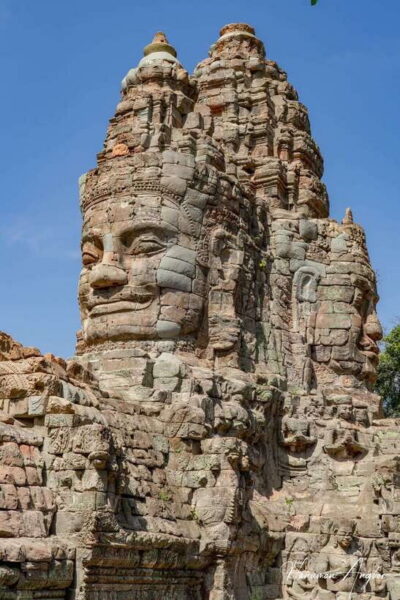
Angkor Wat 2-Day Tour with Sunrise and Sunset
Read our review →
Angkor Wat Sunrise tour with Small – Group and Guide tours
Read our review →
Angkor Wat Highlights and Sunrise Guided Tour from Siem Reap
Read our review →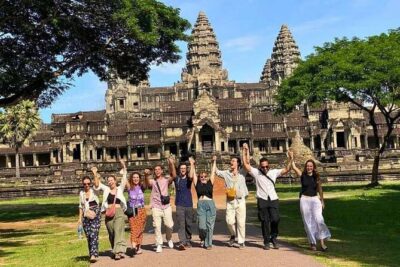
Angkor Wat Sunset Small Group Tour with Lunch Included
Read our review →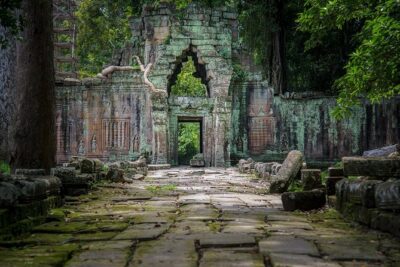
Full-Day Angkor Wat Sunrise Private Tour with Guide from Siem Reap
Read our review →Browse the lists this tour appears in