
REVIEW · ANGKOR WAT TOURS
Siem Reap: Angkor Wat with German or English Guided Tour
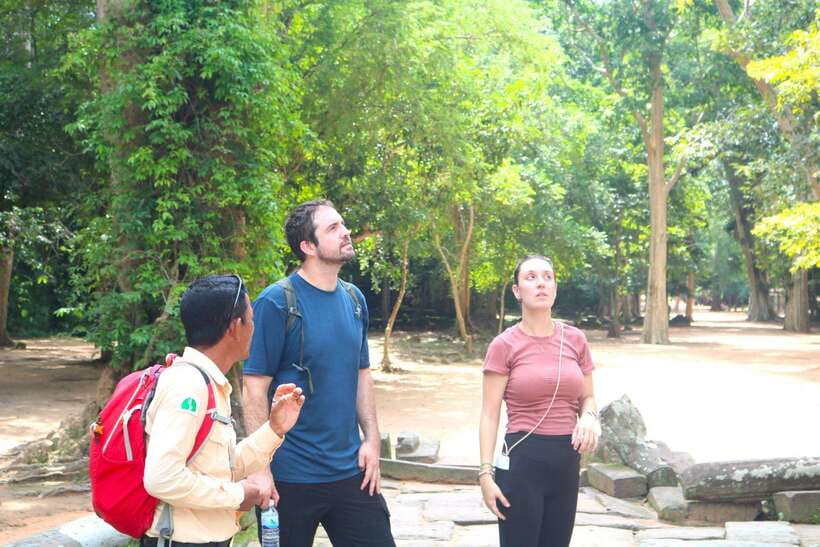
Angkor Wat is only the beginning of this eight-hour temple tour. You move from the grand galleries of Angkor Wat to the stone faces of Bayon, then into the tree-covered ruins of Ta Prohm, with a guide to explain what you are seeing rather than leaving you to decode a wall of carvings alone.
I like the private air-conditioned vehicle, especially when the heat rises, and I like the practical touches: cold water, chilled towels, careful driving, and hotel pickup. Guides including Sak, Bun, Sam, Noy, and Sopheap Rath have been praised for clear English, historical detail, and help finding good photo angles.
The main drawback is cost planning. The tour is $49 per person, but the Angkor temple pass costs another $37, and meals are not included. The day also involves plenty of walking, steps, sun, and uneven ground, so it is not suitable for wheelchair users.
Key points to know before booking
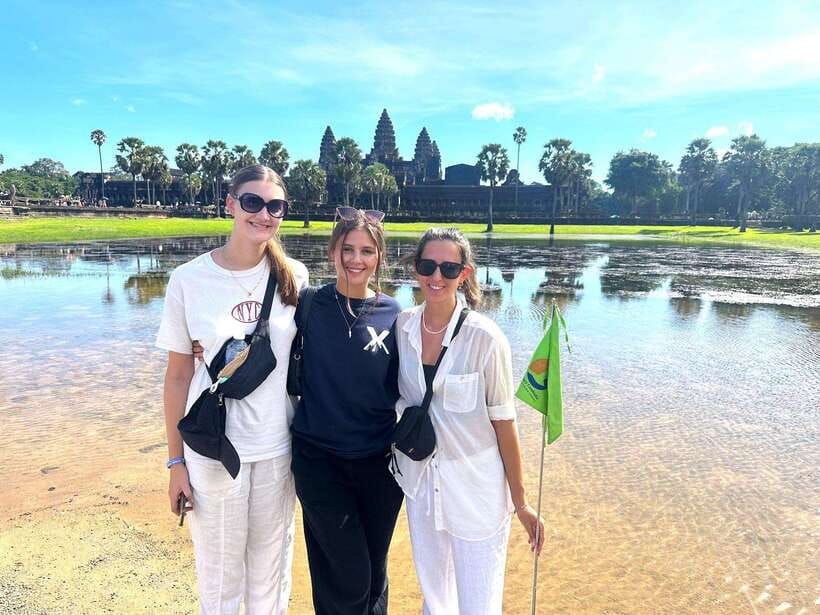
- Angkor Wat gets two full hours, enough time for its courtyards, galleries, towers, and bas-reliefs without racing through.
- Bayon and Angkor Thom follow, giving you both a major temple and the remains of a fortified royal city.
- Ta Prohm is the atmospheric stop, with a maze-like plan and jungle growth pressing against the ruins.
- Private transport makes the heat manageable, with hotel pickup, bottled water, and a driver waiting between sites.
- The $49 price excludes the $37 temple pass, so budget $86 per person before lunch.
- The guide can add real value, explaining architecture, religion, Cambodian history, and details you might otherwise miss.
What this one-day Angkor tour is really like
This is a focused tour of the main temples in the Angkor small circuit. It is designed for someone who wants the essential Siem Reap experience in one day, not for someone planning a slow archaeological study over several days.
Your day begins with pickup at your Siem Reap hotel, with the listed meeting point at 57 2 Thnou Street. The drive to the temple area takes about 20 minutes in a private, air-conditioned vehicle. That short transfer matters. You can use it to cool down, refill your water, and listen to the guide set the scene before the first major stop.
The tour lasts about eight hours. That sounds long, but Angkor is spread across a large area, and every temple requires walking. The schedule gives you time to see the main monuments while keeping the route practical.
You should bring comfortable shoes, a hat, sunglasses, insect repellent, a camera, and cash. Shorts are not allowed, so dress with temple standards in mind. Large bags, smoking, and pets are also not allowed.
More Angkor Wat Tours in Siem Reap:
- Angkor Wat Sunrise or Sunset Tour with Guide from Siem Reap
★ 5.0 · 12,109 reviews - Siem Reap: Angkor Wat: Small-Group Sunrise or Sunset Tour
★ 5.0 · 9,444 reviews - Siem Reap: Angkor Wat 2-Day Tour with Sunrise and Sunset
★ 4.9 · 4,429 reviews
Angkor Wat: two hours inside Cambodia’s great temple
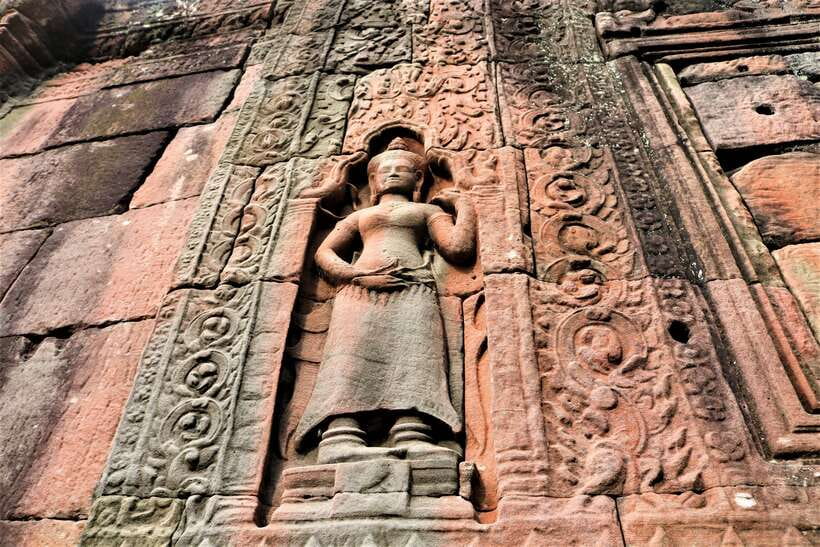
Angkor Wat receives the longest visit, and rightly so. Built in the 12th century, it is a grand example of classical Khmer architecture, with long galleries, towers, courtyards, and detailed bas-reliefs.
A guide helps turn those carvings into something more than attractive stonework. You can ask about the scenes, the religious ideas behind the temple, and the way the building was planned. Several guides on this tour, including Sak, Sam, and Bun, have been praised for explaining both the broad story and smaller details.
The temple is large enough that two hours can pass quickly. You will walk through open areas and enclosed galleries, and you may stop often for photographs. A guide can also help you make sense of the layout and point out angles that are easy to miss when you are focused on finding your way.
Do not expect a quiet, private encounter with the monument. Angkor Wat is the best-known temple in the complex, so it can feel busy. The benefit of this tour is not solitude. It is having transport, orientation, and a person who can explain what you are looking at.
Wear shoes with good grip. The stone surfaces can be uneven, and you will be on your feet for much of the visit. A hat and water are not optional luxuries in Cambodia’s heat.
Angkor Thom and the southern gate
After Angkor Wat, the route moves to Angkor Thom, the fortified city that contains Bayon and several other important monuments. The southern gate provides one of the tour’s most memorable approaches.
Here, 54 stone figures of gods and demons line the causeway. They represent the opposing forces associated with the Churning of the Ocean of Milk, a major Hindu story. The rows of figures lead your eye toward the gate, creating a strong sense of arrival.
The stop at Angkor Thom is listed at about 30 minutes, so this part is more of an introduction than a full exploration of the entire city. That is useful if your priority is the main temple circuit, but you should not expect to see every corner of Angkor Thom in detail.
The fortified city also includes the Terrace of the Leper King and the Terrace of the Elephants. These structures give you a glimpse of the ceremonial and royal side of Angkor. The guide can connect the stone carvings and terraces with the role these spaces played in the ancient city.
Bayon: stone faces and careful explanations
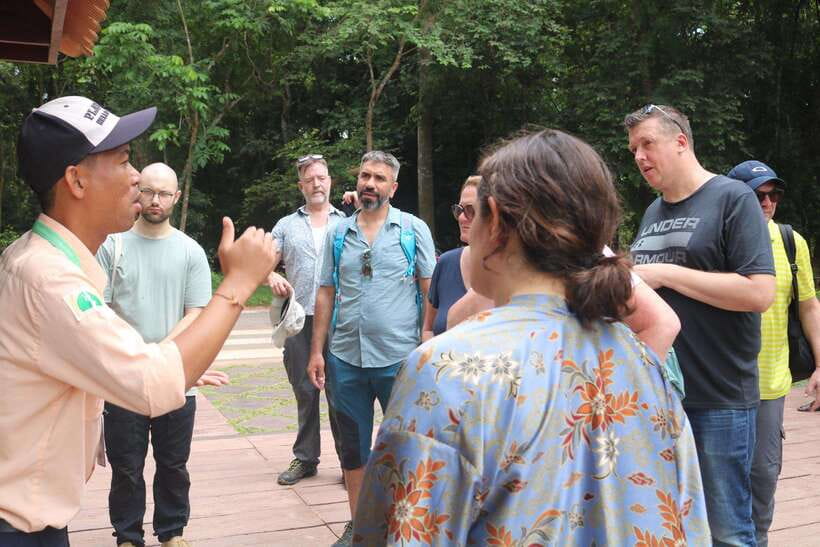
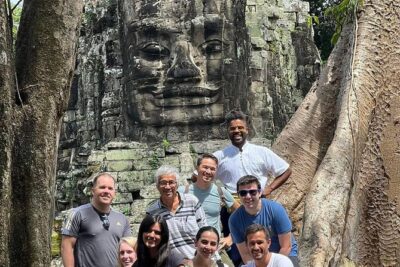
Bayon is the emotional center of the Angkor Thom visit. Its towers carry large stone faces that look out over the temple from different directions. The effect changes as you move through the corridors. From one angle, the faces appear calm and distant. From another, they seem to watch you directly.
The temple can be confusing at first. Its galleries, towers, and narrow passages create a maze, and the layout is not as immediately clear as Angkor Wat’s broad lines. This is where a good guide earns the fee.
The tour allows about an hour at Bayon. That gives you time to see the famous faces, study the carvings, and hear about the temple’s place in Khmer architecture and religion. Guides such as Sam and Sokhuoch have been praised for explaining Cambodian history and temple design in clear English.
Bayon is also a good place to slow down. Angkor Wat makes you look outward across grand spaces. Bayon pulls you into a tighter world of corridors and carved stone. You will want time for both.
More Guided Tours in Siem Reap:
- Siem Reap: Full-Day Angkor Wat Guided Tour with Sunset
★ 4.9 · 3,803 reviews - Angkor Wat Sunrise tour with Small – Group and Guide tours
★ 5.0 · 3,655 reviews - Angkor Wat Highlights and Sunrise Guided Tour from Siem Reap
★ 5.0 · 3,213 reviews - Full-Day Angkor Wat Sunrise Private Tour with Guide from Siem Reap
★ 5.0 · 2,920 reviews
Ta Prohm: the jungle temple
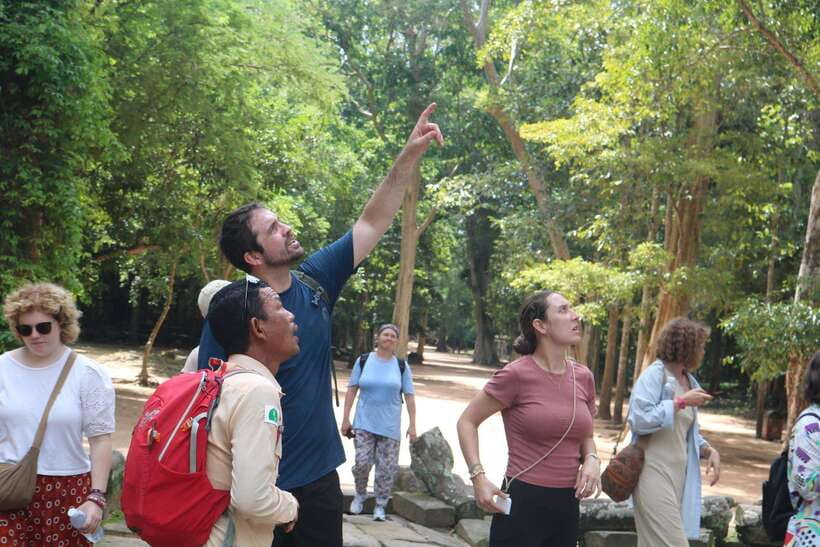
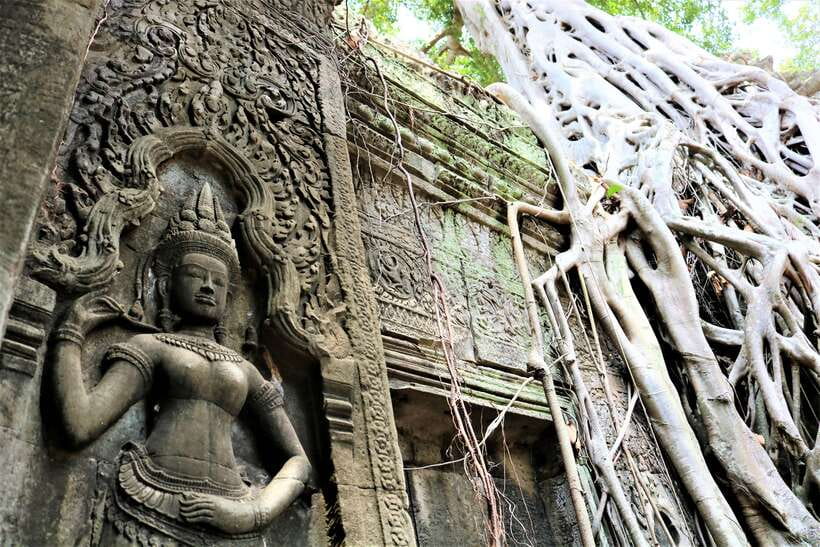
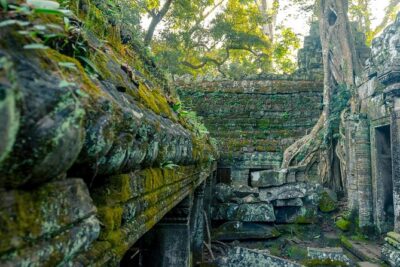
Ta Prohm comes after lunch and is usually the stop people picture when they think of Angkor’s jungle ruins. Trees press against the stone, roots twist over walls, and the temple’s corridors create a maze-like path.
The setting gives Ta Prohm a different mood from Angkor Wat and Bayon. Angkor Wat feels planned and ceremonial. Bayon feels compact and symbolic. Ta Prohm feels partly reclaimed by nature, even though the site is carefully managed.
The tour allows about an hour here. That is enough to walk through the main sections and take photographs, but it may feel short if you want to inspect every gallery. The ground can be uneven, and the combination of roots, stones, shade, and narrow passages requires sensible footwear.
Your guide may also help you avoid wasting time at dead ends. That is one of the useful differences between a guided visit and simply hiring transport. You still have freedom to look around, but you get help finding the major features.
Srah Srang and the midday break
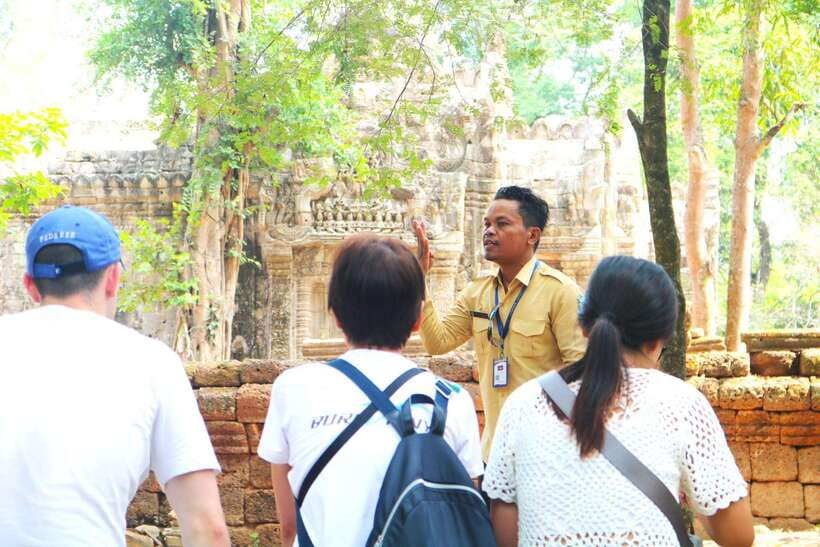
Srah Srang is scheduled for an hour of break time and free time. The reservoir offers a pause between temple visits, which is welcome in a full day of walking.
This is also the natural point to deal with lunch. Meals are not included, and the information for the tour does not set a fixed lunch menu or restaurant. One past itinerary included a small restaurant that was a pleasant surprise, while another found the food disappointing. The sensible approach is to treat lunch as a practical stop, not a central feature of the booking.
You can use the break to eat, rest, take photographs, and cool down. If you prefer to save time, you should know that the tour does not automatically provide a meal. Bring cash and plan accordingly.
The guide makes the difference
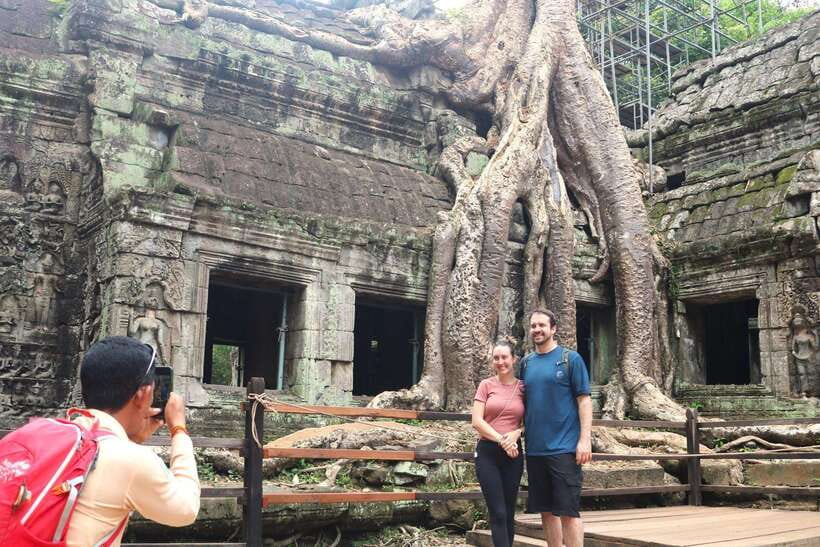
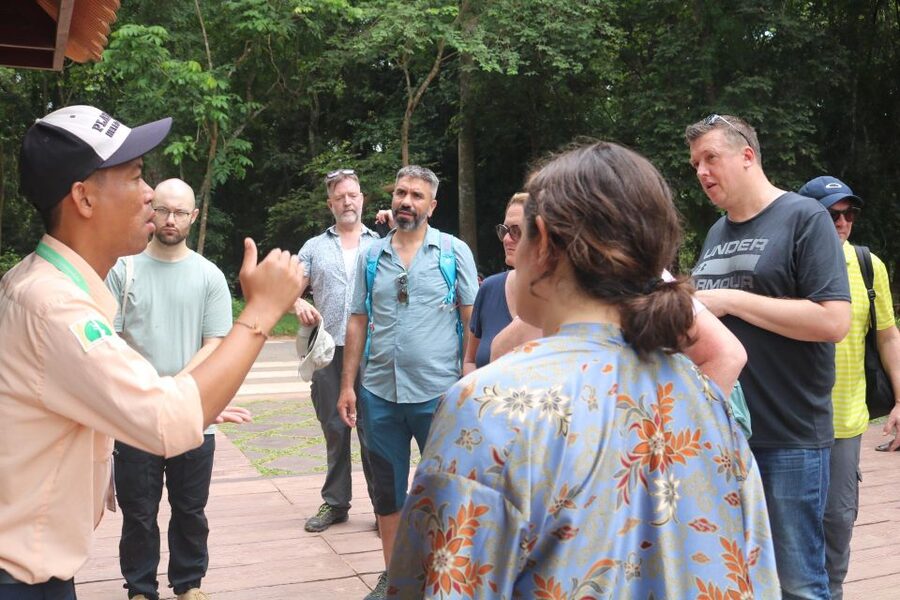
The strongest part of this experience is the guide. A temple complex this large can become a blur of towers and carved walls without context. A good guide gives the day a shape.
The English and German guide options make the tour useful for a wider range of visitors. Specific guides praised for their service include Sak, Bun, Sam, Sopheap Rath, Noy, Nuon Chansarak, Sokhuoch, and Teth. Their strengths vary, but the recurring pattern is clear: strong English, historical explanations, patience, friendly service, and help with photographs.
Sak has been praised for detailed explanations and thoughtful service. Bun has been described as especially strong on history and willing to share stories. Sopheap Rath is noted for friendly, gentle guiding and good English. Sam is valued for being informative without making the day feel like a lecture.
That kind of personal service matters on a private tour. You can ask about Cambodia as well as the temples, request a different pace, or spend more time at a particular site. One guide, Teth, adjusted the itinerary when the group wanted a change. Another visitor arranged an additional temple stop. These examples suggest some flexibility, though you should confirm any change with your guide on the day.
Private transport, cold water, and the heat
The private, air-conditioned vehicle is more than a basic transfer. It gives you a place to recover between temples. The driver waits while you walk, so you are not trying to manage transport in the middle of a hot day.
Drivers including Kosal, Mr Mao, Chi, Mr Bund, Me Sung, and others have been praised for safe driving and attentive service. Cold bottled water and chilled towels appear repeatedly as useful touches. One driver was even praised for opening the car door and keeping the group comfortable at each stop.
You should still expect heat and sweat. Air conditioning does not change the fact that Angkor’s paths and courtyards are exposed. Drink water before you feel thirsty, use sunscreen even though it is not listed among the required items, and keep your hat handy.
The vehicle is also a benefit for older visitors who can walk comfortably but do not want to cover every connection on foot. It is less suitable for anyone who needs step-free access, since the tour is not suitable for wheelchair users and the temples have uneven surfaces.
Price, inclusions, and real value
The tour costs $49 per person. The Angkor entrance pass costs an additional $37 per person and covers all the temples included in the visit. That puts the known total at $86 per person before lunch.
For that price, you receive hotel pickup and drop-off, a live English or German guide, private air-conditioned transport, and bottled water. The pass is not included, and meals are not included.
I consider the price reasonable if you value private transport and a dedicated guide. A cheaper transport-only option might get you between the temples, but it would not give you the same help with history, route planning, or photo spots. The value is strongest for first-time visitors who want to see Angkor Wat, Angkor Thom, Bayon, and Ta Prohm in one organized day.
The value is weaker if you already know the temples well or prefer to spend an entire morning at one site. This tour covers the major stops efficiently, but it is not designed for slow, specialist exploration.
Who should book this experience?
This tour suits first-time visitors to Siem Reap, couples, families with older children, and anyone who wants a clear introduction to Angkor. It also works well if you have only one full day available for the temple complex.
You will probably appreciate it most if you like asking questions and want context instead of simply taking photographs. The guides can explain architecture, religious themes, Cambodian history, and modern life in Cambodia.
It is less suitable for wheelchair users, anyone who dislikes walking, or anyone who wants a completely unstructured day. Shorts are not allowed, large bags are not allowed, and the full schedule can feel tiring in hot weather.
Free cancellation is available up to 24 hours before the tour, and you can reserve now and pay later. Starting times depend on availability, so check the schedule before booking.
My recommendation
I would book this tour if you want the four major Angkor stops handled in one day, with a private car and a guide who can bring the carvings and architecture into focus. The extra $37 temple pass is easy to overlook, so include it in your budget.
Choose it especially if cold water, chilled towels, hotel pickup, and flexible pacing matter to you. Skip it only if you want to explore at a very slow pace, need wheelchair access, or would rather arrange meals and temple visits entirely on your own.
FAQ
How long does the Angkor temple tour last?
The tour lasts eight hours, including transportation between the temples and the return to Siem Reap.
Which temples are included?
The route includes Angkor Wat, Angkor Thom, Bayon, and Ta Prohm. It also includes the southern gate of Angkor Thom, the Terrace of the Leper King, the Terrace of the Elephants, and Srah Srang.
Is the Angkor entrance fee included?
No. The entrance fee costs $37 per person and covers all the temples visited on the tour.
Is lunch included?
No. Meals are not included. The schedule provides an hour of break time at Srah Srang, which can be used for lunch and rest.
What languages are available?
The live tour guide is available in English or German.
Is hotel pickup included?
Yes. Hotel pickup and drop-off in Siem Reap are included. The listed pickup location is 57 2 Thnou Street.
What should I bring?
Bring comfortable shoes, sunglasses, a hat, a camera, insect repellent, and cash. You should also dress appropriately because shorts are not allowed.
Is the tour suitable for wheelchair users?
No. The tour is not suitable for wheelchair users.
Just added around Siem Reap
- Ticket for Angkor Balloon Ride.★ 3.7 · 46 reviews
- Sunrise at Angkor Wat Temple: 3-Hour Private Tour★ 4.7 · 30 reviews
- Small-Group Full Day Angkor wat Guide tour with Sun set★ 5.0 · 136 reviews
- Siem Reap: Private 4-Day Angkor Wat and Phnom Kulen Tour★ 5.0 · 9 reviews
- Angkor Wat: Sunrise 2.5 Days Temples & Tonle Sap-Small Group★ 5.0 · 10 reviews
- Siem Reap : Private Tuk-Tuk Tour of the Magnificent Temples.★ 4.9 · 14 reviews
- Siem Reap: Ultimate Angkor Wat Offbeat Experience by Jeep★ 4.9 · 8 reviews
- Siem Reap: Personalized Angkor Wat Sunrise/Set by TukTuk/Car★ 4.9 · 41 reviews
Angkor Wat Tours, compared.
Angkor Wat Sunrise or Sunset Tour with Guide from Siem Reap
Read our review →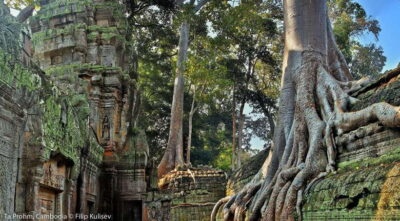
Angkor Wat: Small-Group Sunrise or Sunset Tour
Read our review →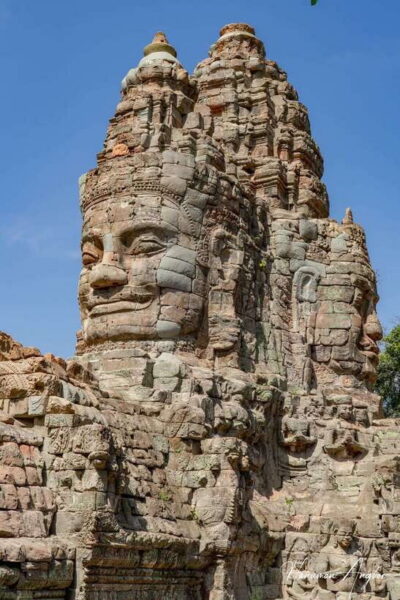
Angkor Wat 2-Day Tour with Sunrise and Sunset
Read our review →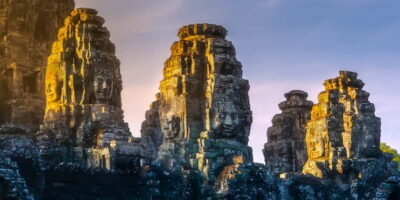
Angkor Wat Sunrise tour with Small – Group and Guide tours
Read our review →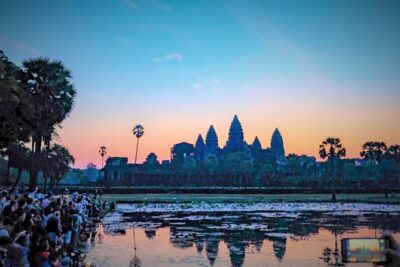
Angkor Wat Highlights and Sunrise Guided Tour from Siem Reap
Read our review →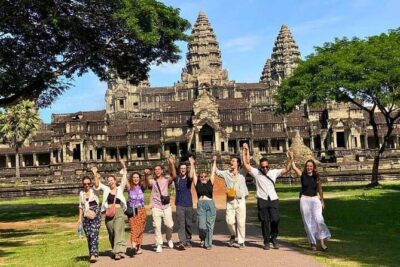
Angkor Wat Sunset Small Group Tour with Lunch Included
Read our review →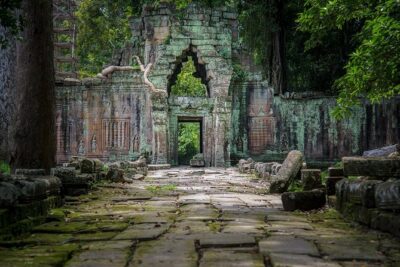
Full-Day Angkor Wat Sunrise Private Tour with Guide from Siem Reap
Read our review →Browse the lists this tour appears in