
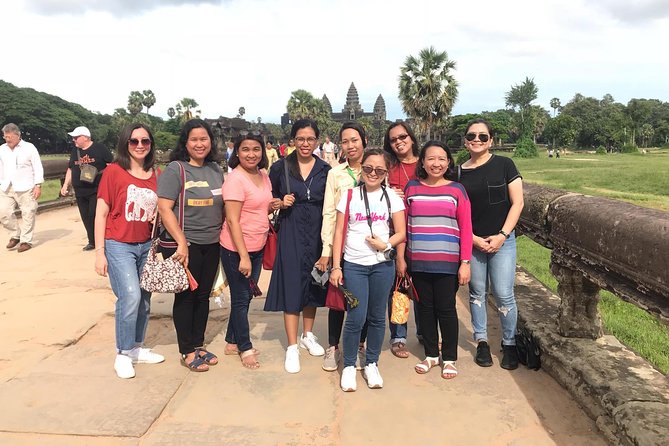
REVIEW · ANGKOR WAT TOURS
Siem Reap Angkor Wat Sunrise Explore The Most Iconic Temples
Angkor Wat is at its best before the heat and the heaviest crowds arrive. This early tour gets you through the western entrance for sunrise, then links Angkor Wat with Banteay Kdei, Ta Prohm, Bayon, and Tonle Om Gate in one long morning.
I like the low $13 price and the sensible route. You get air-conditioned transport, hotel pickup, an English-speaking guide, and drinking water without paying private-tour rates. I also like that Banteay Kdei is included, since its quiet corridors offer a calmer contrast to the famous temples.
The main caution is group size. One booking had more than 40 people spread across two buses, with one guide trying to keep everyone together. This can make explanations and photo stops less personal, so book this for value and coverage rather than a private, unhurried visit.
Key points to know before you book
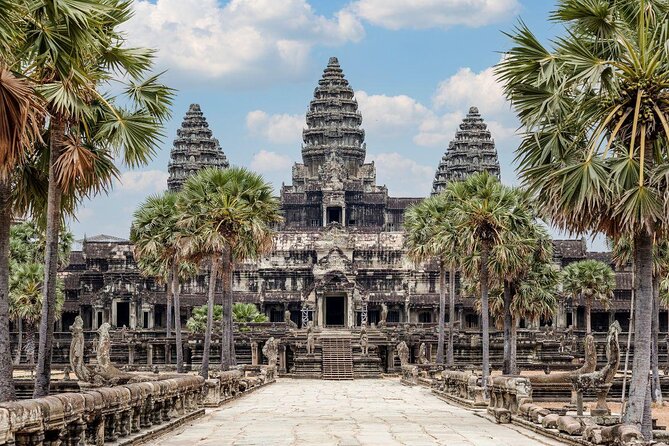
- Sunrise starts the day at Angkor Wat: Arrive early for reflections of the temple towers in the moat before the main daytime crowds.
- Banteay Kdei adds a quieter stop: This partly ruined Buddhist monastery has peaceful chambers and corridors that feel less pressured than the major sites.
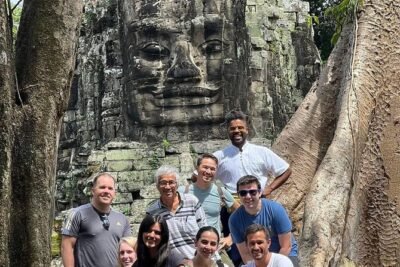
- Ta Prohm is the classic jungle temple: Giant roots climb over the stonework, creating the scene many people associate with the Tomb Raider film.
- Bayon rewards close looking: Its 54 towers carry more than 200 serene stone faces, while carvings show daily life and battles.
- The $13 price is transport-focused: Your guide, minibus, water, pickup, and drop-off are included, but the temple ticket and meal are extra.
- A large group is possible: The tour is a practical shared outing, not a small-group or private experience.
Why the early start matters at Angkor Wat
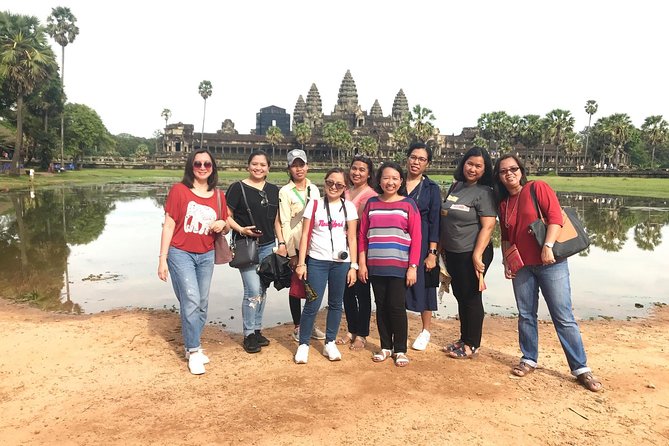
Your morning begins with hotel pickup in Siem Reap between about 4:20 and 5:15 a.m. That is early even by temple standards, but sunrise is the reason to accept the lost sleep. The journey to the Angkor Archaeological Park takes about an hour by air-conditioned minibus.
The precise pickup time depends on your hotel and the day’s arrangements. Keep your phone available and be ready before the stated window. This is not the morning to plan a slow breakfast or a last-minute packing session.
After reaching the park, you purchase your temple entrance ticket at your own expense. The tour price is only $13, so this separate ticket cost is important when working out your real budget. The transport and guiding are covered, but the pass is not.
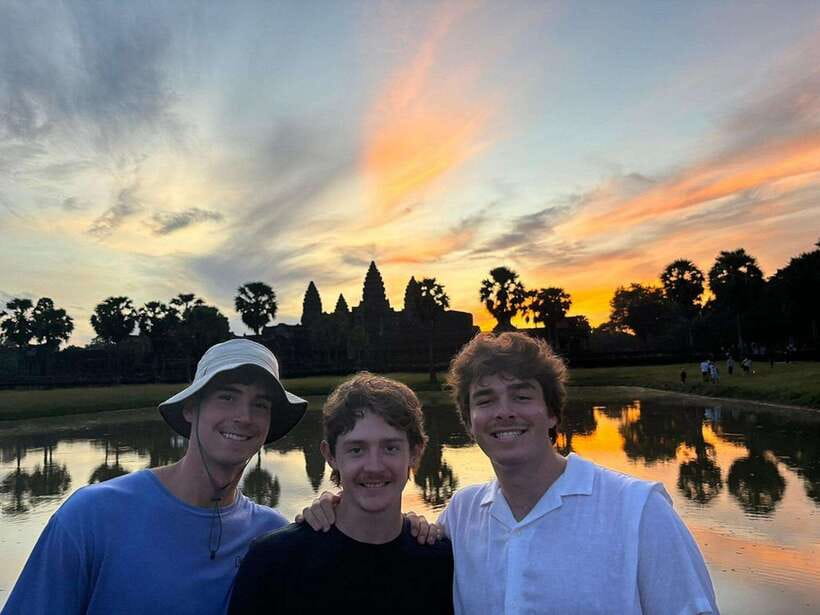
The group enters Angkor Wat through the little-used western entrance. That route gives the morning a quieter feel before you reach the temple’s famous front view. As daylight grows, the towers appear above the moat, and the reflection can make a fine first photograph if the water and weather cooperate.
Do not expect to have the site entirely to yourself. Angkor Wat at sunrise is one of the most popular stops in Siem Reap. The advantage of arriving early is not complete solitude, but better light, cooler temperatures, and a chance to see the temple before the full daytime flow builds.
More Temple Sunrise Tours in Cambodia
- Angkor Wat Sunrise or Sunset Tour with Guide from Siem Reap
★ 5.0 · 12,109 reviews - Siem Reap: Angkor Wat: Small-Group Sunrise or Sunset Tour
★ 5.0 · 9,444 reviews - Siem Reap: Angkor Wat 2-Day Tour with Sunrise and Sunset
★ 4.9 · 4,429 reviews
Inside Angkor Wat, from bas-reliefs to the central sanctuary
The sunrise is only the opening scene. After the photo stop, you spend about two hours at Angkor Wat, with time to enter the galleries and look closely at the carvings.
Angkor Wat began as a Hindu temple dedicated to Vishnu and later became a Buddhist site. That change is visible in the building’s religious story and imagery. A good guide can help you read the temple as more than a grand photograph, explaining how the spaces and carvings fit together.
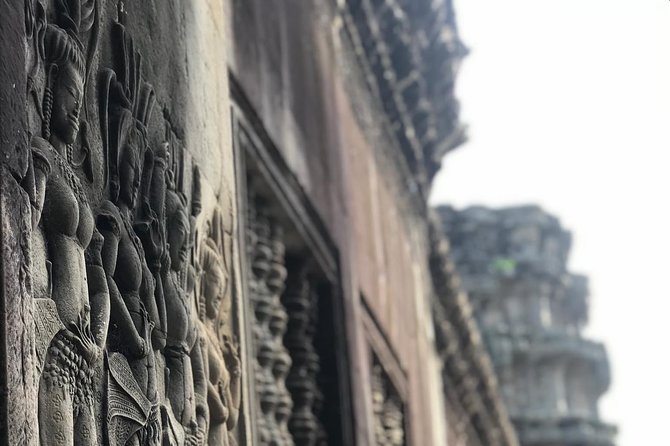
The long galleries contain intricate bas-reliefs based on Hindu mythology. You will also see scenes connected with battles and courtly life. The stonework rewards patience, but the scale of the site can be tiring. Two hours gives you a useful introduction, though it is not enough to examine every panel in detail.
The central sanctuary gives the visit its vertical pull. Angkor Wat is not simply a collection of halls. Its design leads you inward and upward toward the central towers, creating a sense of movement through increasingly sacred spaces.
Wear shoes suited to walking and bring water, even though bottled drinking water is included. The morning remains active: you are not just sitting for a sunrise photo, but walking through galleries, courtyards, and temple passages before moving to the next stop.
Banteay Kdei gives you room to slow down
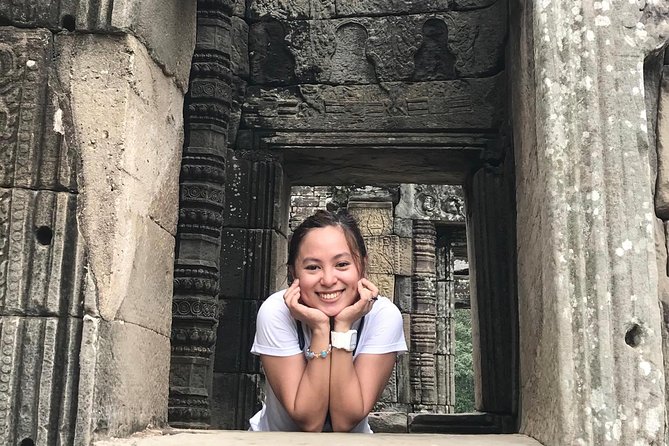
The next stop is Banteay Kdei, scheduled for about an hour. Its name means Citadel of Chambers, and the layout fits that description. You move through corridors and partially ruined rooms rather than simply circling a single monumental tower.
Banteay Kdei was built in the late 12th century as a Buddhist monastery. Its carvings and stone details are less instantly famous than those at Angkor Wat or Ta Prohm, but that is part of its appeal. I like this stop because it changes the pace of the morning.
The temple’s partly collapsed condition gives it a quieter, more mysterious atmosphere. You can look at the architecture without feeling that every angle must become a photograph. The softer pace is useful after Angkor Wat, where the scale and number of details can be overwhelming.
That said, an hour passes quickly. The guide has to keep the group moving, and you may not have time to examine every chamber. If you enjoy ruins for their atmosphere as much as their fame, Banteay Kdei may become one of your favorite stops. If you only want the most famous monuments, it may feel like a shorter supporting visit.
Ta Prohm and the trees that took over the ruins
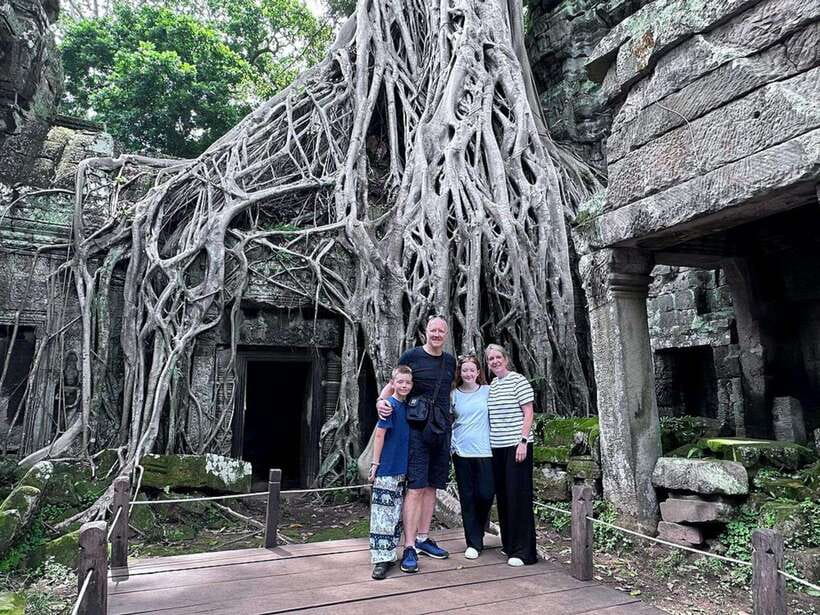
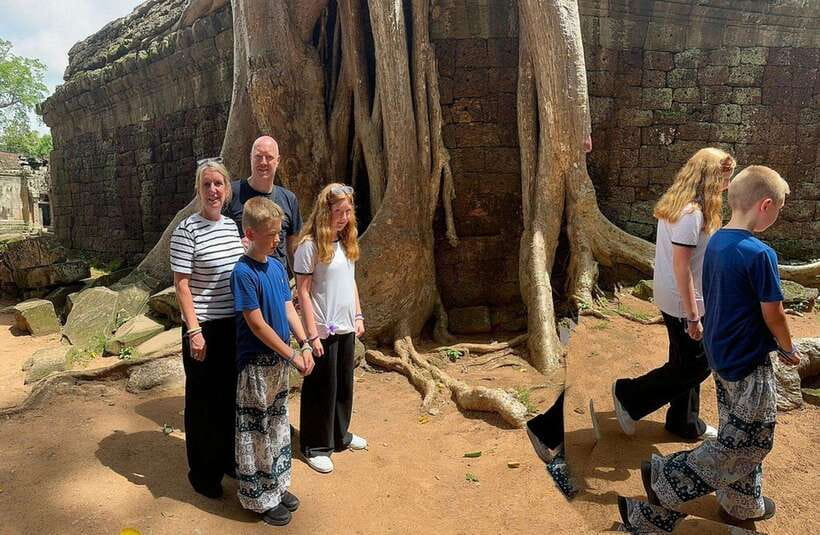
Ta Prohm receives about an hour and a half, making it one of the longest stops after Angkor Wat. The temple is famous for its giant tree roots growing across walls and through the stonework.
This is the site that many people recognize from the Tomb Raider film featuring Angelina Jolie. The film connection brings extra attention, but Ta Prohm is more than a movie location. Its partly unrestored appearance shows what a major stone complex can look like when vegetation and time press into the structure.
The contrast with Angkor Wat is striking. Angkor Wat feels ordered, monumental, and carefully composed. Ta Prohm feels more tangled and exposed, with roots crossing doorways and walls. The appeal comes from that uneasy partnership between architecture and forest.
Your guide can point out the architectural details that are easy to miss beneath the roots. Look beyond the most obvious tree-covered wall. The corridors, carvings, and repeated stone forms help you understand that this was a major religious complex, not just a photogenic ruin.
Expect this to be a popular stop. The best-known tree-root views can attract a crowd, and the group schedule means you may need to share the most dramatic angles. Still, the site has enough visual variety to make the visit worthwhile even when the famous photo point is busy.
More Temple Sunrise Tours in Siem Reap
- Angkor Wat Sunrise tour with Small – Group and Guide tours
★ 5.0 · 3,655 reviews - Angkor Wat Highlights and Sunrise Guided Tour from Siem Reap
★ 5.0 · 3,213 reviews - Full-Day Angkor Wat Sunrise Private Tour with Guide from Siem Reap
★ 5.0 · 2,920 reviews - Angkor Wat Sunrise & 3 Main Temples with Breakfast – Small Group
★ 5.0 · 2,857 reviews
Bayon’s stone faces at the center of Angkor Thom
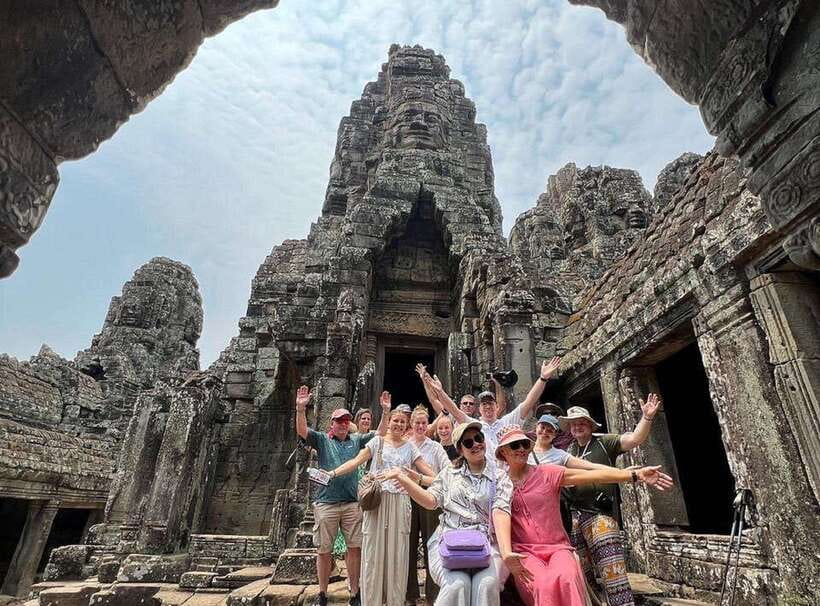
Bayon is the final major temple stop, with about an hour and a half scheduled for walking and explanation. It sits at the center of Angkor Thom and looks different from both Angkor Wat and Ta Prohm.
The temple’s 54 towers are decorated with more than 200 large stone faces of Avalokiteshvara. Their calm expressions appear from different angles as you move among the towers. Some seem to watch from above, while others emerge unexpectedly from the stone corridors.
The faces are the headline, but do not rush past the lower carvings. Scenes of daily life and historical battles show people at work, in conflict, and in ordinary moments. These details help balance the grand religious imagery with scenes that feel more immediate.
Bayon can be confusing at first because its towers and passageways create a tight, layered plan. That is where the guide adds real value. A well-organized explanation helps you understand what to look for instead of wandering through a maze of stone faces without context.
Guide Noun received specific praise for pointing out good photo locations and explaining Angkor Wat clearly. The same kind of practical guidance matters at Bayon, where the best view may not be obvious from the first doorway. Guide quality can vary by departure, but English guiding is included.
The drawback is the same one that affects the rest of the tour: a large group can slow movement through narrow areas. One guide handling more than 40 people may need to repeat instructions and count heads. Stay alert when the group moves, and do not assume every pause will last as long as you would like.
Tonle Om Gate and the road out of Angkor Thom
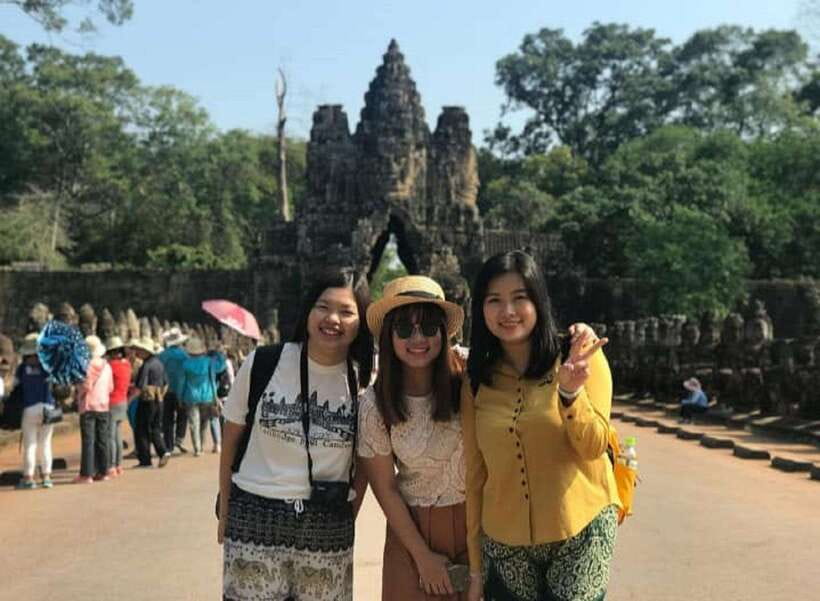
The final stop is Tonle Om Gate, also called the Southern Gate of Angkor Thom. The visit lasts about 30 minutes, which is enough for a photo stop and a short explanation.
The gate is approached by a causeway lined with statues of gods and demons. This dramatic arrangement gives the entrance a strong ceremonial quality. The gate itself is crowned with four giant stone faces, echoing the faces at Bayon.
This stop works well at the end because it lets you see the wider design of Angkor Thom. You are not only visiting individual temples. You are also passing through the grand entrances, roads, and symbolic spaces that connected the ancient city.
Thirty minutes is a reasonable amount of time for the gate. There are not hours of interior chambers to explore, and the main attraction is the approach, the statues, and the gate’s stone face. Use the stop for photographs, but listen to the explanation too. The row of gods and demons is more meaningful when you understand that it is part of the entrance’s planned symbolism.
After Tonle Om Gate, you return to the minibus for about 30 minutes back toward Siem Reap. The tour usually ends between noon and 1 p.m., depending on the pickup time and the pace of the group.
What the $13 price really covers
At $13 per person, this is an inexpensive way to cover the major Angkor sights in one day. You receive hotel pickup and drop-off in Siem Reap City, an air-conditioned bus, an English-speaking guide, and drinking water.
The price does not include the temple ticket or a meal. You should budget for both before booking. The tour’s low cost is best understood as payment for shared transport and a guided route, not as an all-inclusive temple package.
The value is strongest if you want efficient coverage. Hiring separate transport for Angkor Wat, Banteay Kdei, Ta Prohm, Bayon, and the Southern Gate can take more planning. Here, the route is arranged and the driving is handled for you.
The tradeoff is personal space. The $13 rate can attract a large group, and one booking involved two buses with a single guide responsible for more than 40 people. The guide and driver were described as friendly in that case, but the coordination load affected the experience.
For that reason, I would not choose this tour if your top priority is long conversations, flexible photo time, or a slow pace at each temple. I would choose it if you want the main highlights, practical transport, and basic historical guidance at a modest cost.
Timing, comfort, and the physical rhythm of the morning
The tour lasts about eight hours, with pickup in the early morning and return around midday. The day is structured around walking, temple steps, uneven stone surfaces, and repeated movement between the minibus and the monuments.
The air-conditioned vehicle is especially welcome after time in the open courtyards. It gives you a place to cool down between stops, though the exact comfort level depends on the number of people in the bus.
Bring clothing suitable for a religious site and prepare for changing temperatures. The morning begins in darkness and can feel cool, then becomes warmer as the sun climbs. Drinking water is supplied, but a small personal bottle may still be useful.
The schedule is full without being absurd. Angkor Wat receives two hours, Banteay Kdei one hour, Ta Prohm and Bayon about 90 minutes each, and Tonle Om Gate half an hour. Those times allow you to see the main features, but not every carving or corner.
The tour suits you best if this is your first major Angkor visit and you want a clear introduction. It also works well for a short Siem Reap stay, when you need to see several important sites in a single day.
Who should book this shared temple tour
I would recommend it to budget-conscious visitors who value convenience. Hotel pickup, an English-speaking guide, water, and an air-conditioned minibus remove several ordinary travel chores.
It is also a good fit for anyone who wants the classic Angkor sequence: sunrise at Angkor Wat, tree roots at Ta Prohm, stone faces at Bayon, and the statues at Tonle Om Gate. Banteay Kdei adds a quieter stop so the morning is not only a parade of famous names.
Families and mixed-age groups may appreciate the organized route, though the early pickup and long walking day require everyone to be ready for a demanding morning. Photography-minded visitors should benefit from the early light and the guide’s help with photo locations, but should accept that popular viewpoints may be shared.
I would think twice if you dislike crowds or need a flexible pace. A large shared group can mean repeated instructions, waiting for people to return, and less time for detailed questions. If you want a private guide and freedom to linger, a different format would suit you better.
The cancellation terms are useful for uncertain plans: you can cancel up to 24 hours in advance for a full refund, and the reserve-now, pay-later option lets you hold a place without paying immediately.
Should you book the Angkor sunrise tour?
Book it if you want a low-cost, well-covered introduction to Angkor and you are willing to trade privacy for value. The route includes the monuments most first-time visitors want, plus Banteay Kdei, which gives the day a welcome change of mood.
Go in knowing that the temple entrance ticket and meal cost extra, the pickup is very early, and a large group is possible. Noun has been singled out for clear explanations and useful photo guidance, but the assigned guide may vary.
For many people, the combination of sunrise at Angkor Wat, Ta Prohm’s roots, Bayon’s faces, and a $13 starting price will make this a sensible choice. Just keep your expectations realistic: this is an efficient shared tour, not a quiet private exploration.
FAQ
What is included in the tour price?
The price includes an English-speaking guide, air-conditioned bus transportation, drinking water, hotel pickup, and hotel drop-off in Siem Reap City.
Is the Angkor temple ticket included?
No. You must purchase the temple entrance ticket separately, at your own expense.
Is a meal included?
No. The meal is not included in the tour price.
What time is hotel pickup?
Pickup from hotels in Siem Reap City is scheduled between 4:20 a.m. and 5:15 a.m.
What time does the tour finish?
The tour is expected to end between noon and 1 p.m., depending on the day’s timing and group pace.
Which temples and sites does the tour visit?
The route includes Angkor Wat, Banteay Kdei, Ta Prohm, Bayon Temple, and Tonle Om Gate, also called the Southern Gate of Angkor Thom.
Can I cancel for a full refund?
Yes. You can cancel up to 24 hours in advance for a full refund.
More Angkor Wat Tours in Siem Reap
- Siem Reap: Full-Day Angkor Wat Guided Tour with Sunset
★ 4.9 · 3,803 reviews - Angkor Wat Sunset Small Group Tour with Lunch Included
★ 5.0 · 3,059 reviews - Siem Reap: Angkor Wat Sunrise and Full-Day Sightseeing Tour
★ 4.9 · 2,828 reviews - Angkor 2-Day Sunset & Sunrise Small-Group Tour
★ 5.0 · 2,567 reviews
Just added around Siem Reap
- Ticket for Angkor Balloon Ride.★ 3.7 · 46 reviews
- Sunrise at Angkor Wat Temple: 3-Hour Private Tour★ 4.7 · 30 reviews
- Small-Group Full Day Angkor wat Guide tour with Sun set★ 5.0 · 136 reviews
- Siem Reap: Private 4-Day Angkor Wat and Phnom Kulen Tour★ 5.0 · 9 reviews
- Angkor Wat: Sunrise 2.5 Days Temples & Tonle Sap-Small Group★ 5.0 · 10 reviews
- Siem Reap : Private Tuk-Tuk Tour of the Magnificent Temples.★ 4.9 · 14 reviews
- Siem Reap: Ultimate Angkor Wat Offbeat Experience by Jeep★ 4.9 · 8 reviews
- Siem Reap: Personalized Angkor Wat Sunrise/Set by TukTuk/Car★ 4.9 · 41 reviews
Angkor Wat Tours, compared.
Angkor Wat Sunrise or Sunset Tour with Guide from Siem Reap
Read our review →
Angkor Wat: Small-Group Sunrise or Sunset Tour
Read our review →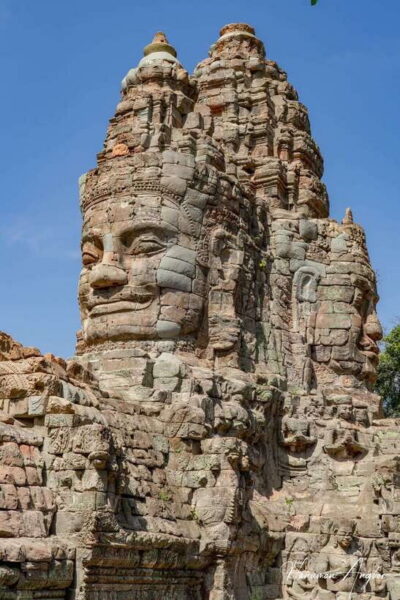
Angkor Wat 2-Day Tour with Sunrise and Sunset
Read our review →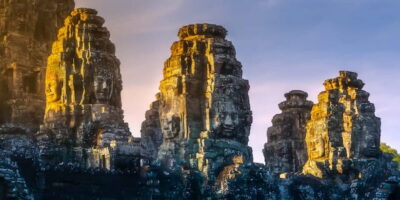
Angkor Wat Sunrise tour with Small – Group and Guide tours
Read our review →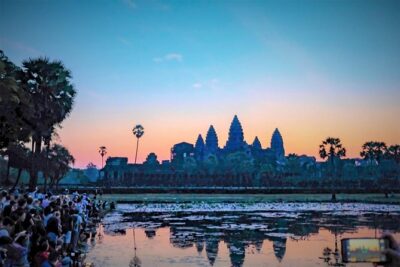
Angkor Wat Highlights and Sunrise Guided Tour from Siem Reap
Read our review →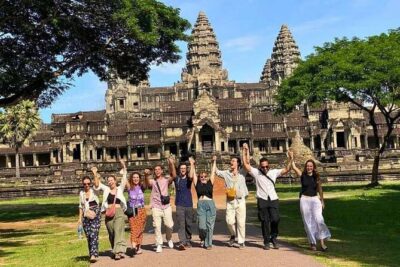
Angkor Wat Sunset Small Group Tour with Lunch Included
Read our review →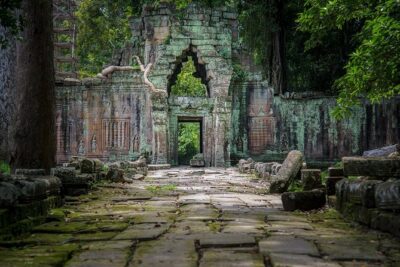
Full-Day Angkor Wat Sunrise Private Tour with Guide from Siem Reap
Read our review →Browse the lists this tour appears in