
REVIEW · BARCELONA TEMPLE TOURS
Món Sant Benet Monastery Tickets
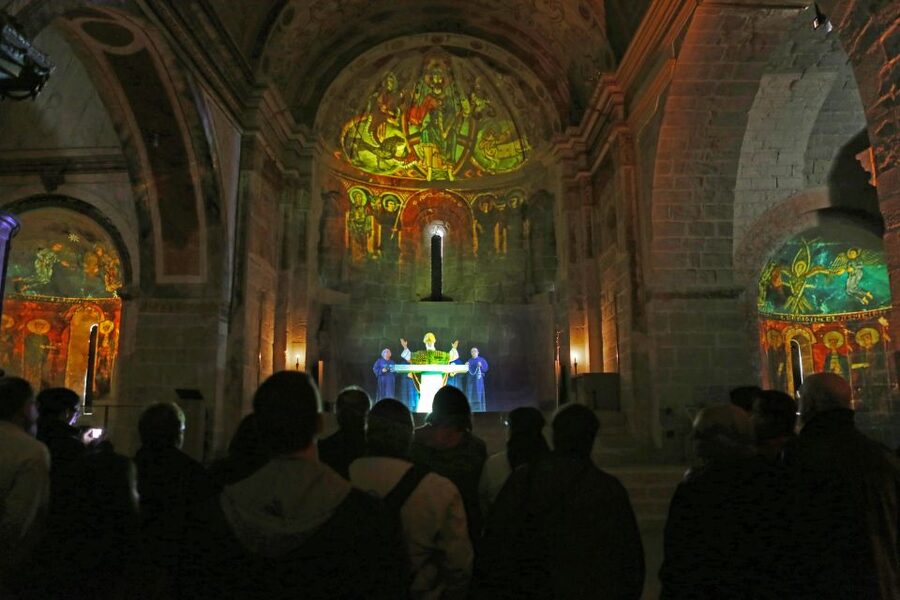
Món Sant Benet turns a 1,000-year-old monastery into an atmospheric walk through Catalonia’s past. Voices, household sounds, and old images appear as you move through the church, cloister, wine cellar, and monastic cells, making the site feel less like a silent ruin and more like a place where daily life once unfolded.
I like the way the audio guide connects medieval art with social history, rather than treating the monastery as a collection of pretty stones. I also like the easy combination of culture and food: after the 1.5-hour visit, you can stay for lunch or dinner at one of three restaurants, including Michelin-starred L’Ó at your own expense.
The main drawback is the fixed length and audio-led format. If you prefer a live guide, spontaneous questions, or a long, slow look at every architectural detail, this visit may feel brief. The monastery is about 68 kilometers from Barcelona, so you should also allow time for the journey there and back.
Key points to know before you go
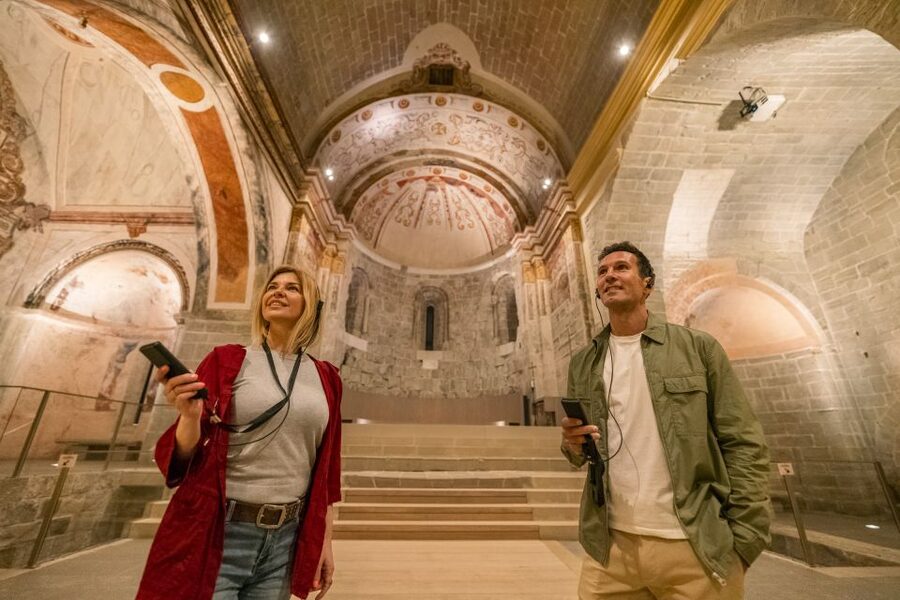
- A 1.5-hour route through a medieval monastery: The visit covers the church, cloister, wine cellar, and cells in the Montserrat gallery.
- A sound-and-image experience, not just a building tour: Audio, voices, everyday noises, and historic images help explain how the monastery functioned.
- A useful introduction to Catalan history: The museum follows major changes in Catalonia over roughly the last millennium.
- Four audio-guide languages: You can choose Catalan, English, Spanish, or French.
- A good food stop after sightseeing: Three restaurants are available on site, including L’Ó, but meals are not part of the ticket.
- Easy booking terms: You pay $18 per person, can reserve now and pay later, and can cancel up to 24 hours before the activity for a full refund.
What Món Sant Benet adds to a Barcelona trip
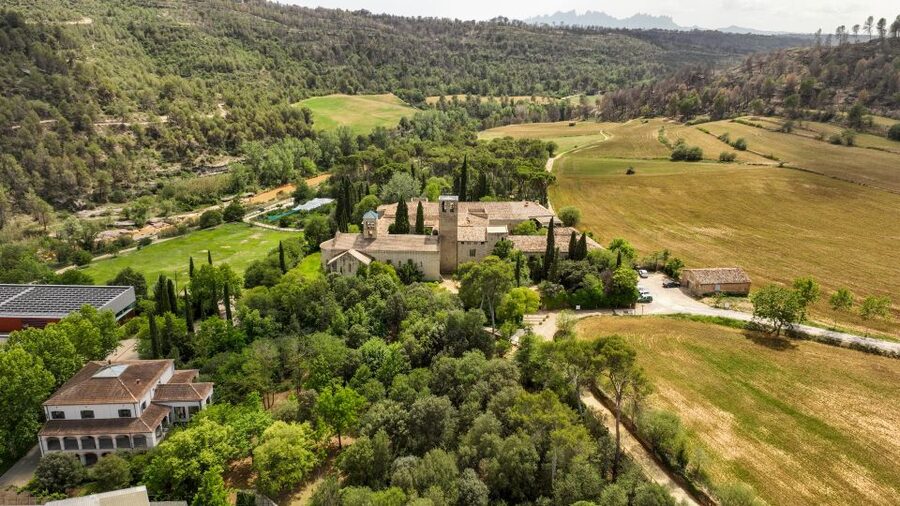
Barcelona is full of major sights, but its city center can make Catalonia feel smaller than it is. Món Sant Benet gives you a reason to leave the urban core and see how faith, work, art, food, and community shaped life outside the capital.
The monastery sits in Sant Fruitós de Bages, around 68 kilometers from Barcelona. That distance matters. This is not a quick add-on between two central Barcelona attractions. You will need to plan transport and allow time for the return journey, but the setting gives the visit a different pace.
The site combines several ideas in one experience. You get medieval architecture, a museum about Catalan history, a sensory audio presentation, and access to restaurants. For me, that mix makes the ticket more useful than a basic entrance to an old church.
At $18 per person, the value depends on how you use the visit. If you only want a fast look at a cloister, the price may seem high for 90 minutes. If you appreciate a structured museum route and plan to eat on site, the ticket becomes a practical part of a half-day outing.
More Entry Tickets in Barcelona:
- Montserrat Monastery Ticket with Escolania Boys’ Choir
★ 4.4 · 55 reviews - Lisbon: Jerónimos Monastery Entrance Ticket
★ 4.1 · 14,164 reviews - Bali: Uluwatu Kecak and Fire Dance Show Entry Ticket
★ 4.2 · 5,189 reviews
Entering the monastery at La Fábrica
Your visit begins at La Fábrica, the reception area of Món Sant Benet on Camí de Sant Benet in Sant Fruitós de Bages. The activity also ends at this meeting point, so you do not need to arrange a separate finishing location.
The entrance point is useful because it gives you a clear place to begin and finish. You can arrive, collect or access the audio-guided visit, and then follow the route through the complex without needing to work out where the experience starts.
The supplied information does not give a detailed transport plan from Barcelona, so you should check your own route before booking. The key fact is the distance: Món Sant Benet is about 68 kilometers from the city. It is best treated as a planned outing rather than a last-minute detour.
The visit lasts 1.5 hours. That is long enough for a focused introduction, but it is not a full-day archaeological or architectural study. I would leave room before or after the tour if you want to eat, sit quietly, or take in the wider monastery project at a relaxed pace.
Following the audio route through a thousand years
The audio guide is central to the experience. You are not simply walking from room to room while reading short labels. The presentation uses voices, everyday sounds, and images from the past to suggest how the monastery changed over time.
That approach should work well if you like history explained through atmosphere. A church or cloister can be beautiful, but without context it may be hard to understand who used it, what happened there, and how the building fitted into ordinary life.
The audio guide is available in Catalan, English, Spanish, and French. That choice makes the visit accessible to a broad mix of international and local visitors. No individual guide names are provided, because this is an audio-guided entrance rather than a tour led by a named person.
You can expect the experience to move at a set pace or follow a defined sequence, although the available information does not specify how much freedom you have between stops. If you like controlling every minute, check the starting times and route details before you reserve.
The church and the monastery’s spiritual center
The church is one of the principal features included in the visit. Its importance is not only architectural. It helps you understand the monastery as a working religious institution, not simply an old complex preserved for sightseeing.
Medieval churches often look spare to modern eyes, but their meaning came from use, ritual, and community. The audio presentation is designed to place the building within that wider story, linking the physical space to the people who lived and worshipped there.
The information provided does not list specific paintings, sculptures, dates, or architectural styles inside the church. You should not expect a specialist catalogue of every feature. Instead, expect a general cultural route that explains the monastery’s role within Catalan history.
This is where the visit’s emotional tone seems strongest. The combination of historic images and human voices gives the church more than visual appeal. It asks you to picture the daily presence of people who are no longer there.
A few more temple visits around Barcelona worth a look
- Montserrat Monastery Half Day Experience from Barcelona
★ 5.0 · 6,014 reviews - Montserrat Monastery Small Group or Private Tour Hotel pick-up
★ 5.0 · 5,144 reviews - Montserrat Small Group: Monastery, Black Madonna & Natural Park
★ 5.0 · 1,690 reviews - From Barcelona: Montserrat Monastery, Easy Hike, Cable Car
★ 4.9 · 1,021 reviews
The cloister and the value of looking slowly
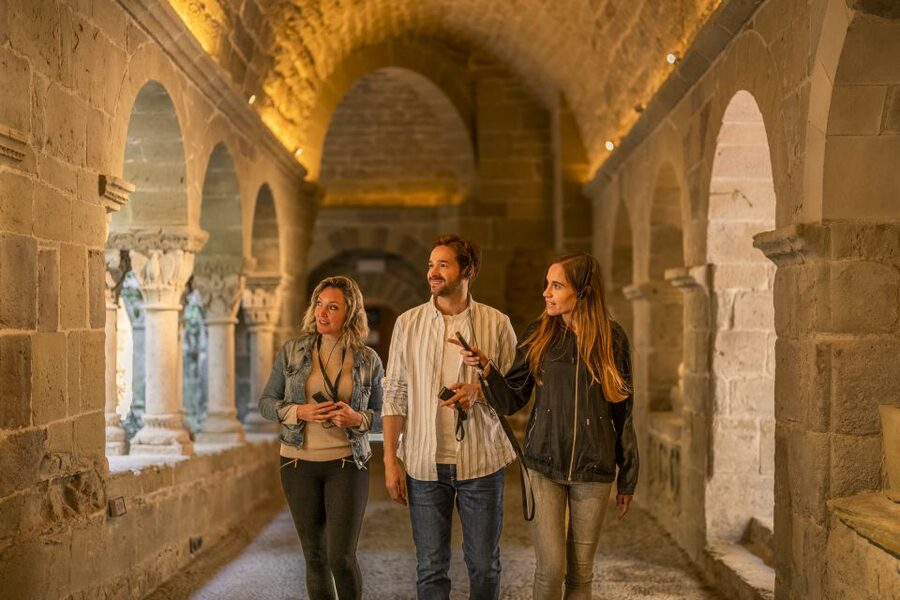
The cloister is another key stop. A cloister usually rewards patience: arches, stonework, light, and repeated shapes can be easy to miss if you hurry through with a camera raised.
Here, the audio guide should help you read the space as part of monastic life. Rather than seeing it as an isolated courtyard, you can connect it to movement through the monastery and to the rhythm of the community that once used it.
I would resist trying to finish the route as quickly as possible. The full visit is only 90 minutes, but that does not mean every minute needs to be spent listening without looking around. Pause when the architecture catches your eye, then continue with the commentary.
The drawback is that an audio guide can make you feel tied to the device or narration. You may need to divide your attention between listening and examining the stone details. That is a normal trade-off with this type of museum presentation.
The wine cellar and ordinary monastic life
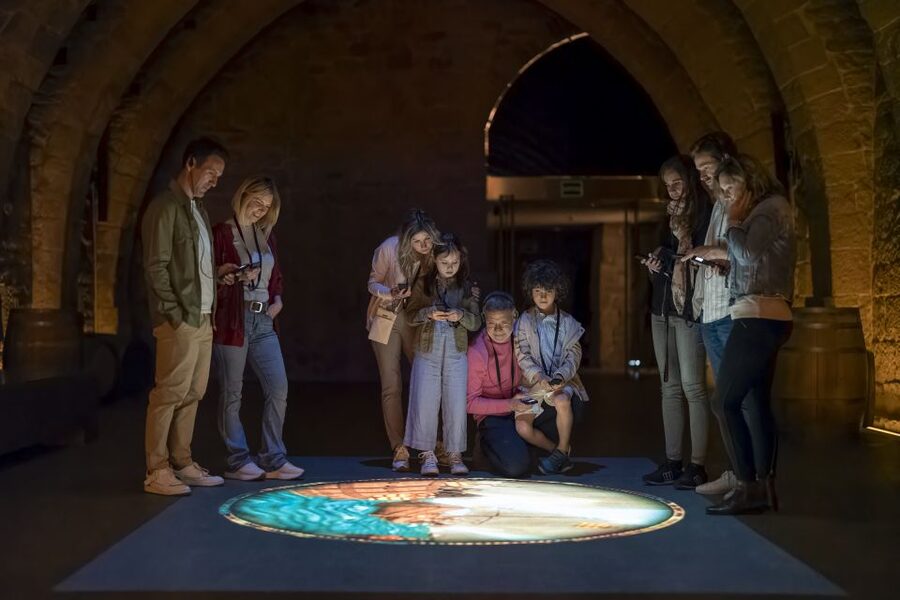
The wine cellar adds a practical side to the tour. It shifts the focus from worship and grand architecture to food, drink, storage, labor, and the economic life of the monastery.
That contrast is valuable. A monastery was not only a place for prayer. It needed supplies, workers, rooms for storage, and systems that supported the people living there. The cellar helps make that side of the story visible.
The connection to food continues after the tour, since Món Sant Benet has three restaurants. This creates a clear link between the site’s past and its present identity as a cultural and leisure project with a strong food focus.
You should keep your expectations measured. The ticket includes entrance and the audio guide, not a tasting or restaurant meal. The cellar is part of the cultural visit, while any food or drink afterward is an extra cost.
The Montserrat gallery and monastic cells
The route also includes the cells in the Montserrat gallery. These spaces bring the visit down to a personal scale. Instead of viewing the monastery only through large public areas, you get a sense of the smaller rooms connected with individual religious life.
The word cells can sound austere, and the experience is likely to feel more intimate here than in the church or cloister. The audio content helps connect these rooms with the social evolution of Catalonia and with the changing role of the monastery over time.
The available details do not specify the size, furnishings, or decoration of each cell. I would therefore treat this section as part of the broader story rather than expect a fully reconstructed bedroom or a detailed display of personal objects.
Still, these rooms matter because they help balance the route. You move between communal spaces and private ones, between ceremony and routine. That range gives the 1.5-hour visit a useful shape.
A museum about Catalonia, not only a monastery
Món Sant Benet presents itself as a journey through key points in Catalan history and the social changes of the last millennium. That wider focus is one of the strongest reasons to choose it over a simple architectural visit.
You do not need to arrive with specialist knowledge of Romanesque art or medieval institutions. The audio guide is built to explain the setting and its changing social meaning. One especially positive response describes the experience as very educational for someone interested in Catalan Romanesque art, which is a good clue about its appeal.
At the same time, this is not presented as a complete history course on Catalonia. The route uses the monastery as its main lens. If you want a broad survey of every period, region, and political event, you will need additional museums or reading elsewhere.
I like that the visit connects art to people. Medieval architecture can become dry when it is reduced to dates and styles. Here, the focus on voices, sounds, and social change gives the building a human scale.
Food after the cultural visit
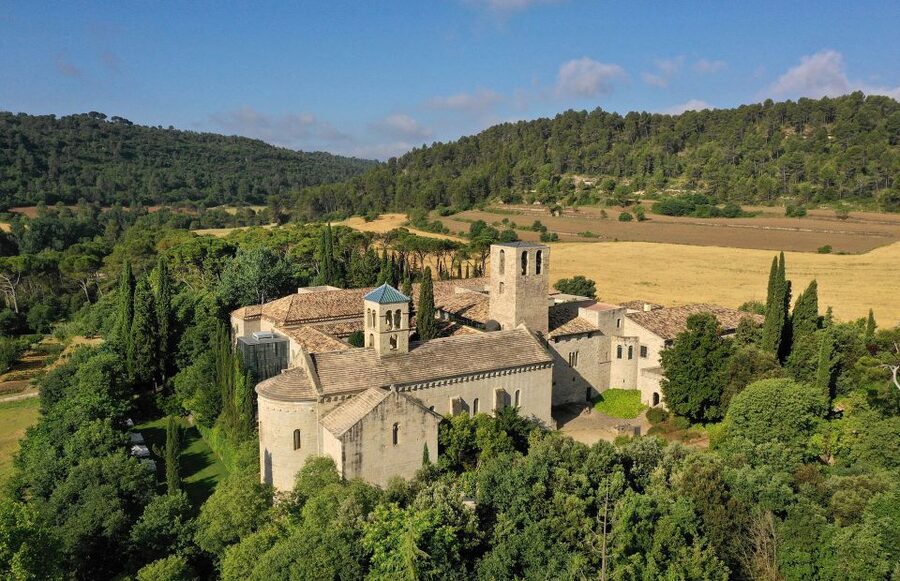
Món Sant Benet has three restaurants, including the Michelin-starred L’Ó. None is included in the $18 ticket, so you should think of dining as an optional extension rather than part of the booked activity.
This is a useful choice if you want to make the journey from Barcelona worthwhile. A 90-minute museum visit can feel short after a long trip, while adding a meal gives the outing a more relaxed shape.
L’Ó will appeal to you if you are planning a special meal and are comfortable with a higher bill. The available information does not provide menus, prices, or booking requirements, so check those details directly before you count on eating there.
The other two restaurants may offer a different price level, but specific menus and costs are not provided. You should confirm availability and pricing in advance, especially if dining is an important part of your day.
The food option also fits the monastery’s wider character. This is not only a preserved medieval site. It has been developed as a place where culture, nature, and gastronomy meet, giving you several ways to spend time there.
Who will enjoy this experience most
I would recommend Món Sant Benet to you if you enjoy historic buildings but want more explanation than a standard entrance ticket provides. The combination of audio, sound, images, and architectural stops gives the visit a clear narrative.
It should suit people interested in Catalan culture, medieval art, Romanesque architecture, and the social history of religious communities. Families may also appreciate the use of voices and sound, though the information does not specify a child-focused version of the audio guide.
The four language options make it practical for international visitors. English, Spanish, French, and Catalan are covered, so you can choose the language in which historical details are easiest for you to follow.
You may want to skip it if you have only a few hours in Barcelona and do not want to travel outside the city. It may also be less suitable if you insist on a live guide or want a very detailed specialist tour of the architecture.
For wheelchair users, the experience is listed as wheelchair accessible. That is important, though the information does not describe every surface, room, or route detail. If you need precise access information, contact the provider before booking.
Price, timing, and booking flexibility
The price is $18 per person. For that amount, you receive entrance to Món Sant Benet and the audio guide, with the visit lasting 1.5 hours.
I see the price as fair for a well-produced museum route, especially if the sound and image elements are important to you. It is less compelling if you plan to spend only a few minutes taking photographs and leaving.
Starting times vary, so you need to check availability before choosing your date. The activity does not give a single daily departure time in advance, which means your broader schedule should remain flexible until you see the available slots.
You can reserve now and pay later, which helps if you are still arranging a Barcelona itinerary. Cancellation is free up to 24 hours before the activity for a full refund. Those terms reduce the risk of booking while your plans are still taking shape.
Should you book Món Sant Benet?
Book it if you want a thoughtful monastery visit that connects Catalan art and history with the sounds of ordinary life. The church, cloister, wine cellar, and Montserrat gallery give you a varied route, while the audio presentation adds context that a self-guided wander might miss.
I would especially choose it if you can pair the visit with a meal. The $18 ticket alone gives you a focused 90-minute cultural experience, but the three restaurants make the trip feel more complete.
Skip it if your Barcelona schedule is tight, you dislike audio guides, or your main goal is a long, specialist study of medieval architecture. For everyone else, Món Sant Benet offers a useful change of pace and a clear introduction to Catalonia beyond the capital.
FAQ
Where is Món Sant Benet located?
Món Sant Benet is in the Catalan town of Sant Fruitós de Bages, about 68 kilometers from Barcelona. The meeting point is La Fábrica, the reception area on Camí de Sant Benet.
How long does the visit last?
The activity lasts 1.5 hours. You can spend additional time at the site if you choose to eat at one of the restaurants afterward.
What does the $18 ticket include?
The ticket includes entrance to Món Sant Benet and an audio-guided visit. Restaurant meals are not included.
Which languages are available for the audio guide?
The audio guide is available in Catalan, English, Spanish, and French.
What parts of the monastery are included?
The route includes the church, cloister, wine cellar, and cells in the Montserrat gallery. It also presents the monastery’s role in Catalan history and social change.
Is the activity wheelchair accessible?
Yes. The activity is listed as wheelchair accessible.
Where does the activity begin and end?
It begins at La Fábrica, the reception area of Món Sant Benet, and ends back at the same meeting point.
Are restaurant meals included?
No. You can eat at one of the three restaurants, including L’Ó, but all dining costs are your own responsibility.
Can I reserve now and pay later?
Yes. You can reserve your place and pay nothing at the time of booking.
What is the cancellation policy?
You can cancel up to 24 hours in advance for a full refund.
Just added around Barcelona
- Montserrat Monastery Horse Riding & Walk – Small Group (Max 8)★ 5.0 · 45 reviews
- Montserrat Nature Walk, Monastery and Museum from Barcelona★ 5.0 · 58 reviews
- Montserrat & beyond private from Barcelona with different options★ 5.0 · 32 reviews
- Montserrat Tour with Cogwheel Train, Monastery & Black Madonna★ 4.0 · 10 reviews
- Full-Day Trip Barcelona to Montserrat Monastery & Cava Winery★ 5.0 · 158 reviews
- Transfer to Montserrat Monastery from Barcelona★ 4.5 · 94 reviews
- Montserrat Land of Shrines – One Day Small Group Hiking Tour from Barcelona★ 5.0 · 38 reviews
- Montserrat Horseback Riding & Monastery – Small Group (Max 8)★ 5.0 · 45 reviews
Barcelona Temple Tours, compared.
Montserrat Monastery Half Day Experience from Barcelona
Read our review →
Montserrat Monastery Small Group or Private Tour Hotel pick-up
Read our review →
Montserrat Small Group: Monastery, Black Madonna & Natural Park
Read our review →


Montserrat Monastery & Horse Riding Experience from Barcelona
Read our review →
Montserrat Hiking Experience & Monastery Premium Small Group Tour
Read our review →Browse the lists this tour appears in