
REVIEW · ANGKOR WAT TOURS
Angkor Wat: Sunrise: Ta Prohm and Bayon Temple Tour
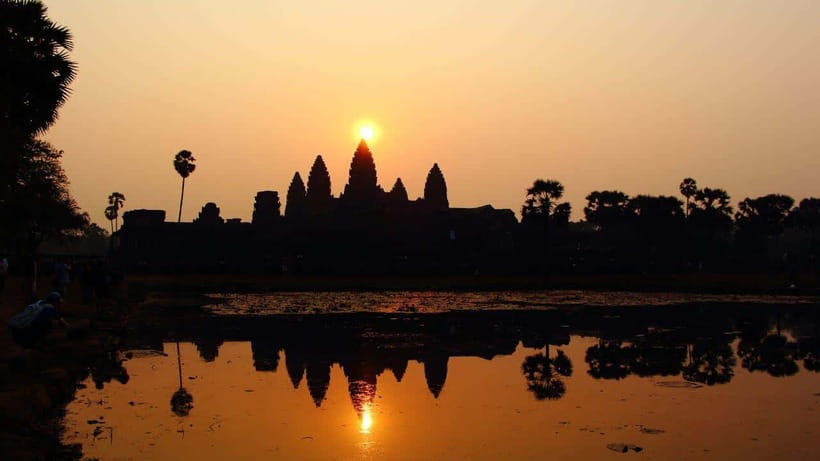
Angkor Wat at sunrise is the main event, but the clever part of this tour is how it gets you inside from the quieter eastern side before the crowds build. You have time to watch the sky brighten by the library pools, then spend about two hours exploring the temple’s corridors, carvings, central chambers, and upper terraces. I especially like the early arrival for a good reflection view and the guides’ warm, personal style. Sokpee, Chhay, Kiz, Sam, and Sopheaprath have all been praised for clear history, good humor, and helpful photography tips.
I also like the cool towels, bottled water, and hotel pickup, small comforts that matter after hours on your feet. The drawback is the very early start, often before 4 a.m., and the $16 tour price does not include the required $37 Angkor pass. Add breakfast at your own cost, and this is a longer, busier morning than the low headline price first suggests.
- Sunrise from Angkor Wat’s library pools: Arrive early enough to find a useful position for the temple reflection.
- Two hours inside the main temple: See bas-reliefs, cloisters, central chambers, and upper terraces with a guide.
- Ta Prohm before the heat peaks: Walk among trees and stone ruins at the temple once home to 2,740 monks.
- Bayon’s enormous stone faces: Study the 12th-century temple at the heart of Angkor Thom.
- Comfort between long walks: Travel in an air-conditioned vehicle and receive bottled water and cool towels.
- A strong low-cost option: Pay $16 for the tour, then budget separately for the one-day temple pass and breakfast.
The sunrise is worth the alarm
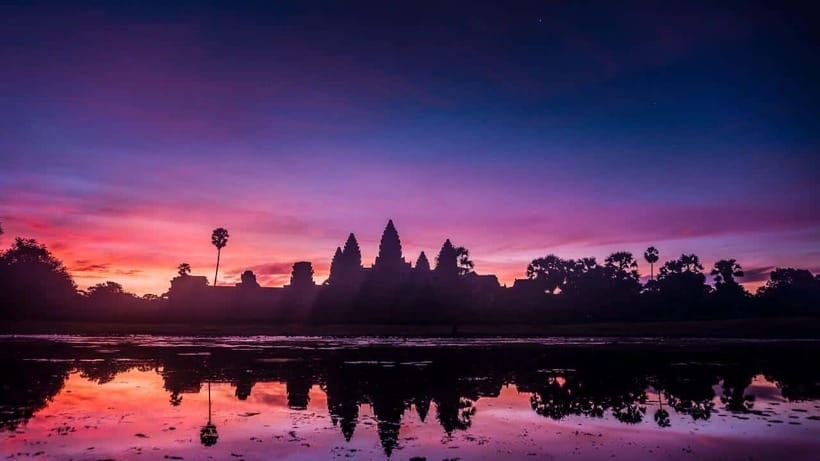
You leave your hotel in Krong Siem Reap before dawn, traveling about 20 minutes by air-conditioned van. The exact pickup time depends on the date and sunrise, so check the confirmed start time carefully. Bring a small torch, since the first walk begins in darkness.
The approach from the eastern side is a useful touch. Instead of simply arriving at the most obvious viewing point and waiting, you enter Angkor Wat through less-used corridors. In the dark, the old stone passages feel quiet and slightly mysterious. Your guide can point out the cloisters and explain the scenes carved into the walls before daylight makes their detail easier to see.
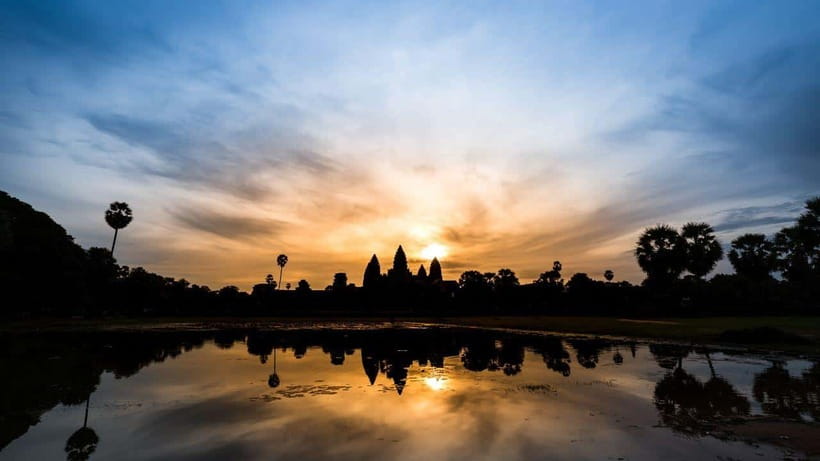
Sunrise itself takes place near one of the ancient library pools. The familiar image is the temple towers reflected in water, but conditions are not guaranteed. Cloud, haze, or a gray sky can soften the effect. Arrive early anyway. Atsuko found the early arrival helpful for getting a good position, and Eliza brought a boxed breakfast from her hotel for the later break.
You should expect other people at this famous viewpoint. The tour’s advantage is not private access. It is getting there early enough to make a sensible choice of where to stand, then moving on for a proper visit inside the temple.
Two hours to understand Angkor Wat
After the sky brightens, the tour gives Angkor Wat about two hours. That is enough time for more than a quick photo stop, though the temple is so large that you still need to keep moving.
You will see long galleries, carved bas-reliefs, inner courtyards, central chambers, and the upper terraces. The carvings are not random decoration. They show religious stories, battles, royal power, and scenes from Khmer life. A good guide helps you read them rather than simply walk past rows of stone figures.
This is where guides such as Sokpee, Chhay, and Kiz add real value. They explain the changes in religion, architecture, and royal rule that shaped the complex. Chhay has been praised for mixing historical detail with jokes, while Samnung, also called Lucky, is remembered for keeping people together with his mango sticky rice reminder. That kind of humor helps when your brain is still catching up after a pre-dawn wake-up.
The upper terraces require walking and stairs. They also make the scale of Angkor Wat easier to grasp. From above, you can see how the temple was planned as a sacred mountain, with each level leading toward the central towers. Wear comfortable shoes and expect uneven stone.
The pace is guided, so you are not free to linger everywhere for as long as you like. That is a fair trade on an eight-hour route with several major sites, but serious photographers may want a private visit later for more control.
More Temple Sunrise Tours in Cambodia
- Angkor Wat Sunrise or Sunset Tour with Guide from Siem Reap
★ 5.0 · 12,109 reviews - Siem Reap: Angkor Wat: Small-Group Sunrise or Sunset Tour
★ 5.0 · 9,444 reviews - Siem Reap: Angkor Wat 2-Day Tour with Sunrise and Sunset
★ 4.9 · 4,429 reviews
Breakfast at Srah Srang, on your own terms
The morning break lasts about an hour around Srah Srang. Breakfast is not included, and you pay directly at a local restaurant. Bring cash, and remember that the $16 tour price does not cover food.
This stop works well because you have just finished the most demanding part of the morning. You can eat, rest, and let your eyes adjust to ordinary daylight before the next temples. Eliza brought a boxed breakfast from her hotel, which is a practical idea if you prefer a familiar meal or want to avoid ordering while tired.
The break is not a formal food experience, so keep expectations simple. It is mainly a useful pause between temple visits. Atsuko noted that the breakfast place was not overly expensive, but prices can vary. If you want to control your spending, bring a hotel breakfast and some cash for drinks or snacks.
Ta Prohm and the power of trees over stone
From Srah Srang, you continue to Ta Prohm for about an hour. This is one of the most atmospheric stops in the Angkor Park, but its appeal is different from Angkor Wat.
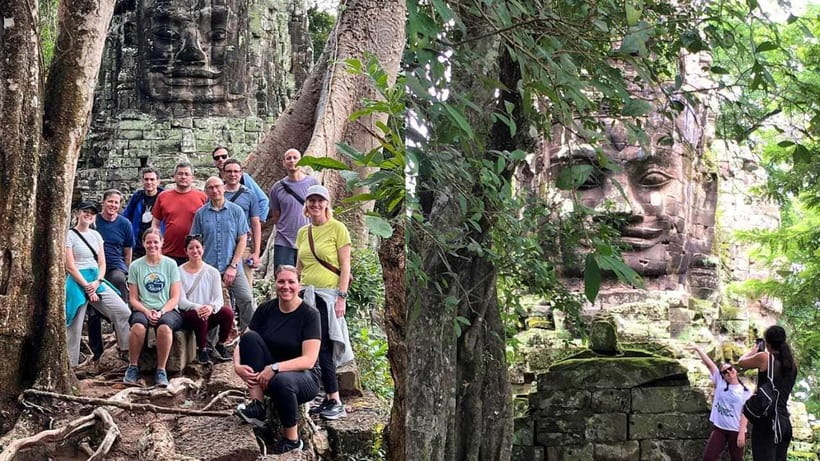
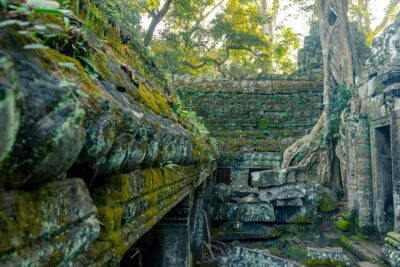
Ta Prohm was once home to 2,740 monks. Today, tree roots press over walls, courtyards, and galleries, making it easy to see why the temple is so memorable. The ruins look much as they did when French explorer Henri Mouhot encountered the site in the early 1850s. That does not mean the place is untouched, but the combination of trees, collapsed stone, and narrow passages gives it a strong sense of age.
Your guide explains how the temple functioned rather than treating it as only a photo backdrop. Listen for the details about religious life, the Khmer Empire, and the practical scale of a major temple complex. With only an hour here, you will not see every corner. The visit is designed to give you the strongest sections without turning the entire morning into a long architectural survey.
The paths can be uneven, and you will spend much of the time walking. Keep your comfortable shoes on, and do not wear shorts. Shoulders and knees must be covered inside the temples. The rule is easy to follow if you wear loose, light clothing that covers both.
Bayon, Angkor Thom, and a city of stone faces
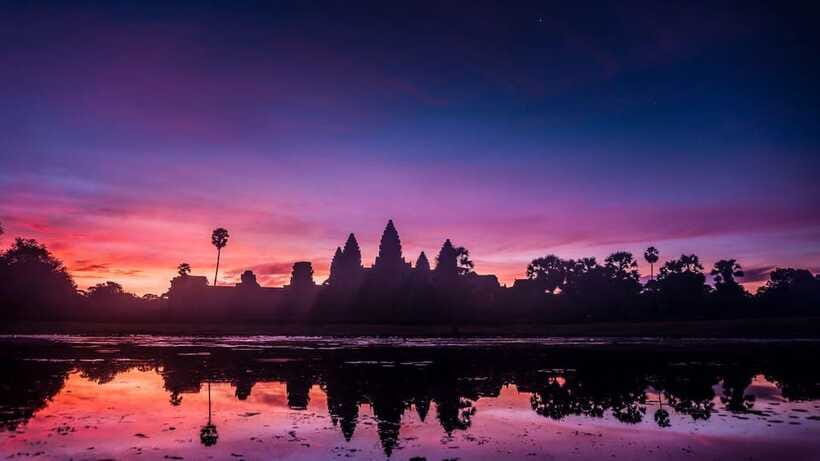
The route then reaches Angkor Thom, the fortified city that contains Bayon. You first pass the Terrace of the Leper King and the Terrace of Elephants, both tied to the ceremonial heart of the old city.
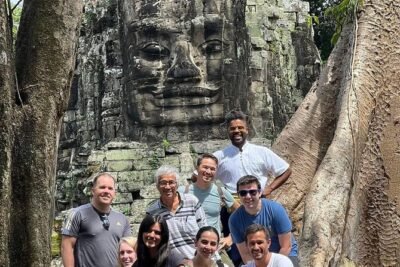
Bayon is the visual surprise of the day. Its central towers carry more than 200 enormous carved faces. They look calm and watchful, and they appear from several angles as you move through the temple. The structure is more compact and confusing than Angkor Wat, so a guide is especially useful here. Without help, you may see faces and towers but miss how the temple’s layout works.
The visit lasts about an hour. You will walk through the central area, look closely at the towers, and hear about the 12th-century setting of the temple. The stonework is impressive, but the paths can feel tight, especially when several groups arrive at once. Follow your guide closely. Samnung’s stick together advice is practical, not just funny.
Next comes the Southern Gate of Angkor Thom, also called Tonle Om Gate. A row of 54 stone figures lines each side of the approach, with gods on the left and demons on the right. The figures hold a serpent, creating a striking entrance scene that connects with major Hindu and Khmer stories.
You spend about 20 minutes here. That is enough for an explanation and photographs, but not a full exploration. The gate is a short final stop rather than another large temple visit.
More Angkor Wat Tours in Cambodia:
- Siem Reap: Full-Day Angkor Wat Guided Tour with Sunset
★ 4.9 · 3,803 reviews - Angkor Wat Sunrise tour with Small – Group and Guide tours
★ 5.0 · 3,655 reviews - Angkor Wat Highlights and Sunrise Guided Tour from Siem Reap
★ 5.0 · 3,213 reviews - Angkor Wat Sunset Small Group Tour with Lunch Included
★ 5.0 · 3,059 reviews
What the $16 price really covers
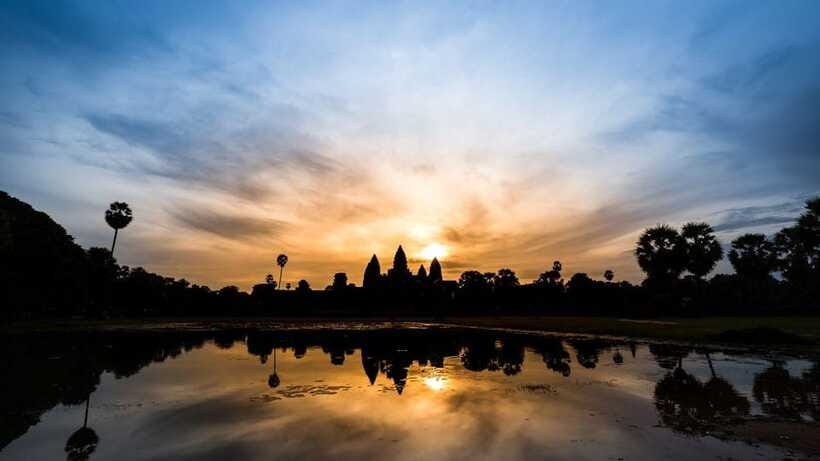
At $16 per person, this is a strong value for transport, an English-speaking guide, hotel pickup and drop-off, bottled water, and cool towels. You are also paying for a full morning route that links Angkor Wat, Ta Prohm, Bayon, Angkor Thom, and the Southern Gate without arranging each transfer yourself.
The important calculation is the temple pass. You must buy a one-day Angkor ticket for $37, bringing the basic cost to $53 before breakfast. That is still reasonable for an eight-hour guided day, but do not mistake the advertised tour price for the full expense.
The pass covers all the temples visited that day, so the fee makes more sense if you plan to see additional sites on your own after the tour or during the same ticket period. If you only want a short sunrise photo stop, this is more time and money than you need. If you want the main Angkor highlights in one organized morning, the price is fair.
Transportation also matters. You return to Siem Reap between about 12:30 and 1:30 p.m., depending on the day. The van gives you air conditioning between long walks, and the driver handles the road while you focus on the temples. A cool towel after each stop is a small but welcome comfort in Cambodia’s heat.
The guide can shape the whole morning
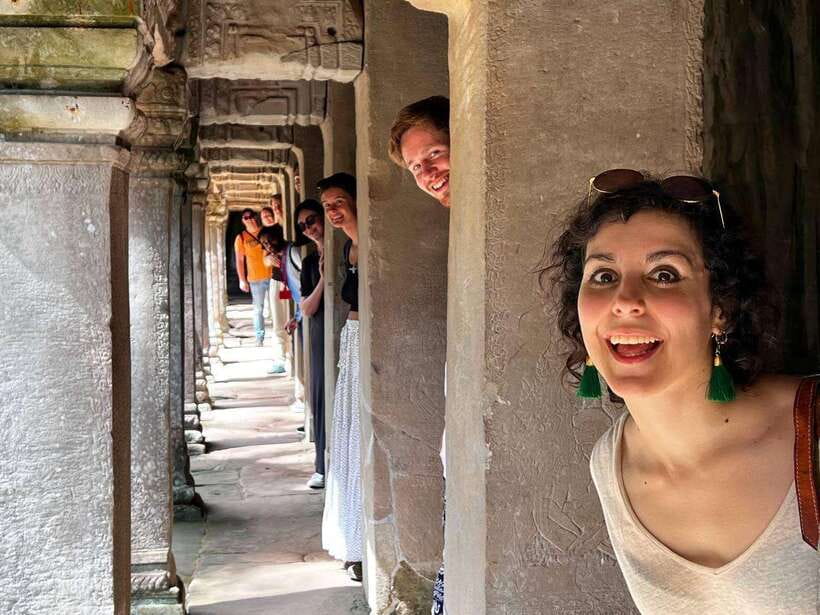
The route is fixed, but the human side varies with the guide. Names praised for warmth and clear explanations include Mr. Sokpee, Sopheaprath, Chhay, Kiz, Sam, and Lucky, also known as Samnung. You cannot necessarily request a particular person, so book this for the tour structure rather than a guaranteed individual guide.
The strongest guide qualities are easy to understand. You need someone who can explain religious stories without burying you in dates, answer questions, keep the group moving, and point out good photo positions. Sopheaprath has been singled out for photography help, while Sokpee was praised for explaining religion, architecture, and the different kingdoms connected with the temples.
Communication before pickup is useful, too. One guide messaged the day before with the pickup time and expectations. That helps when you are setting an alarm for the middle of the night.
The tour is in English. It is not suitable for children under eight or for wheelchair users. The temple surfaces, stairs, and walking distances make those restrictions important rather than minor fine print.
What to bring for a smoother morning
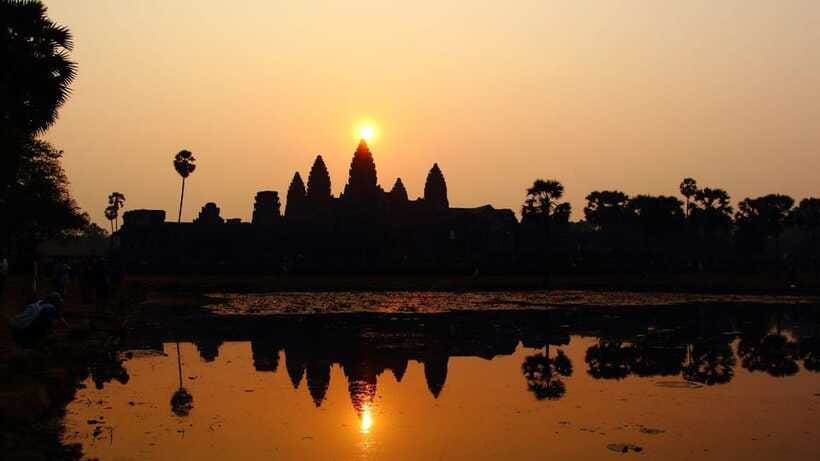
Pack lightly, but bring the things that solve real problems:
- Comfortable walking shoes for uneven temple paths and stone steps
- A small torch for the dark start
- Cash for the temple pass, breakfast, and other personal purchases
- A camera or phone with enough battery for sunrise and the temples
- Biodegradable sunscreen
- Clothing that covers your shoulders and knees
- A hotel breakfast if you prefer not to buy food at the stop
Shorts are not allowed, and casual clothing is fine only if it meets the temple rules. The morning begins cool enough for some people to appreciate a light layer, but the later walk can feel warm. The provided water and cool towels help, but they do not replace your own sunscreen and drinking water needs.
Who should book this temple day?
I would choose this tour if you have one main morning for Angkor and want the major sights arranged in a sensible order. It suits solo visitors, couples, and small groups who want a guide but do not want to pay for a fully private experience. Luna joined alone and found the format welcoming, which is useful if you are traveling without company.
It is also a good first visit. Angkor Wat can feel overwhelming, and Ta Prohm and Bayon have very different layouts and stories. Having someone explain what you are seeing gives the day more meaning than simply collecting photographs.
I would hesitate if you dislike early starts, need a slow pace, or want long periods for photography. The tour begins before dawn, covers several sites, and ends around lunchtime. You will walk a lot, follow a schedule, and share the experience with other people.
Free cancellation up to 24 hours before departure and the option to reserve now and pay later make it easier to plan around uncertain schedules. Still, the temple pass, breakfast, and suitable clothing remain your responsibility.
Should you book it?
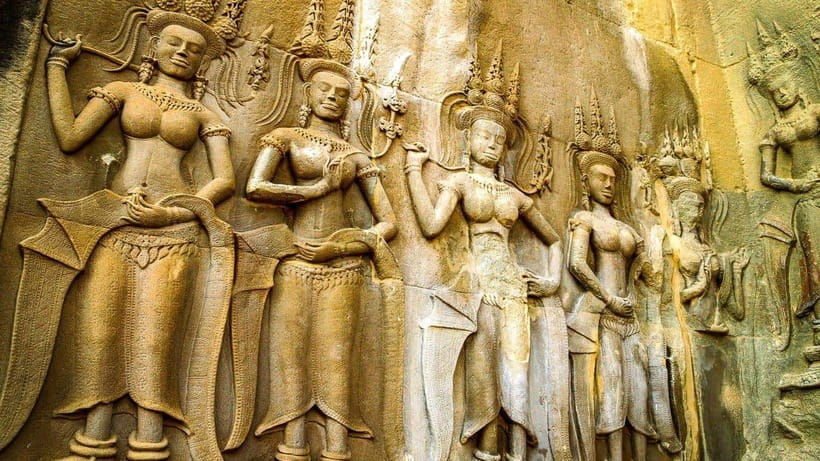
Book this tour if you want sunrise at Angkor Wat, a solid introduction to the park’s three famous temples, and an English-speaking guide who can explain the stories behind the stone. The best parts are the early position at the reflection pool, the full two hours inside Angkor Wat, and the comfort of having transport and water sorted out.
Skip it if you want a private, unhurried photography day or cannot manage a pre-dawn departure. For most first-time visitors with a single day for the main temples, though, the $16 guiding and transport fee is a sensible buy once you budget for the $37 pass and breakfast.
FAQ
How long does the Angkor sunrise tour last?
The tour lasts eight hours and usually returns to Siem Reap between 12:30 and 1:30 p.m.
What temples and sites are included?
The route includes Angkor Wat, Srah Srang for the breakfast break, Ta Prohm, Bayon Temple, Angkor Thom, the Terrace of the Leper King, the Terrace of Elephants, and the Southern Gate.
Is the Angkor temple pass included?
No. The one-day temple entrance fee costs $37 and is paid separately from the $16 tour price.
Is breakfast included?
No. You can buy breakfast at a local restaurant near the stop, or bring a boxed breakfast from your hotel.
What should I wear?
Wear comfortable clothing that covers your shoulders and knees. Shorts are not allowed inside the temples, and comfortable shoes are recommended.
Is the tour suitable for children and wheelchair users?
The tour is not suitable for children under eight or for wheelchair users. It includes considerable walking and temple surfaces that may be uneven.
Just added around Cambodia
- Oudong Temples & Phnom Prasith Private Tour from Phnom Penh★ 5.0 · 11 reviews
- Full-day: Wat Banan. Old bamboo train. Bat Cave. Killing cave★ 5.0 · 13 reviews
- Grand Tour-Ek Phnom. Baset. Bamboo Train. Wat Banan. Phnom Sampov★ 5.0 · 20 reviews
- Morning Tour,Ak Phnom temple,Rice wine,Rice Paper, killing Field★ 5.0 · 22 reviews
- Two Days Angkor Wat Park-Beng Mealea and Kampong Phluk Village★ 5.0 · 14 reviews
- 2-Days in temples and other areas★ 5.0 · 101 reviews
- Ticket for Angkor Balloon Ride.★ 3.7 · 46 reviews
- Sunrise at Angkor Wat Temple: 3-Hour Private Tour★ 4.7 · 30 reviews
Angkor Wat Tours, compared.
Angkor Wat Sunrise or Sunset Tour with Guide from Siem Reap
Read our review →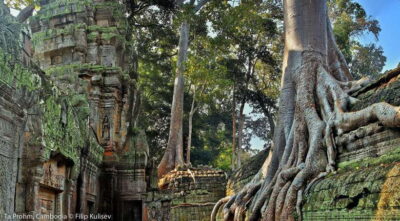
Angkor Wat: Small-Group Sunrise or Sunset Tour
Read our review →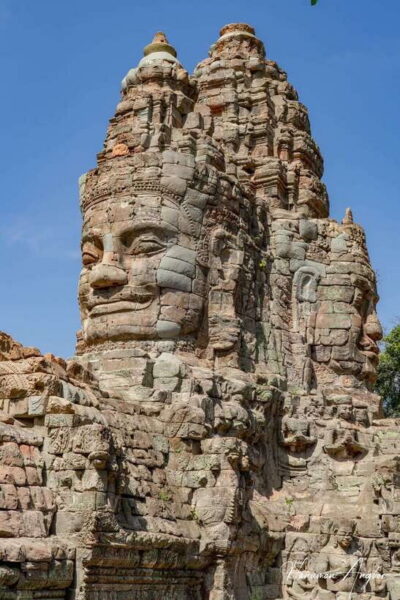
Angkor Wat 2-Day Tour with Sunrise and Sunset
Read our review →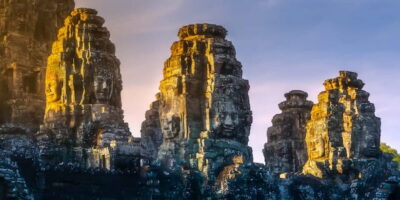
Angkor Wat Sunrise tour with Small – Group and Guide tours
Read our review →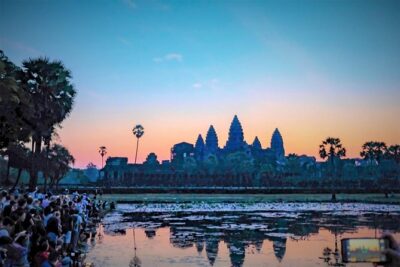
Angkor Wat Highlights and Sunrise Guided Tour from Siem Reap
Read our review →
Angkor Wat Sunset Small Group Tour with Lunch Included
Read our review →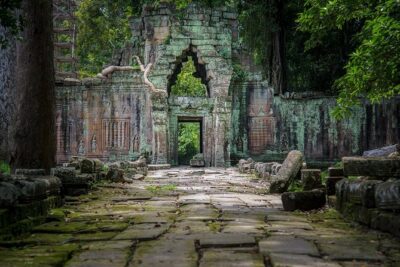
Full-Day Angkor Wat Sunrise Private Tour with Guide from Siem Reap
Read our review →Browse the lists this tour appears in